

Dark circles vs pigmentation vs shadow: the 60-second self-test and what actually helps
Most people call everything under the eye “dark circles.” That’s like calling every stomach pain “gas.” Convenient, wrong, and it delays the fix.
Under-eye darkness usually comes from one of three things: pigmentation, vascular darkness, or shadowing. Sometimes it’s two at once. The reason your concealer never “solves” it is simple: you’re treating the wrong type.
This guide is everyday-friendly (office, lifestyle, camera, sleep deprivation, all of it). You’ll get a quick self test, ingredient-level help without brand names, and a small “when to see a derm” note so you don’t Google yourself into panic.
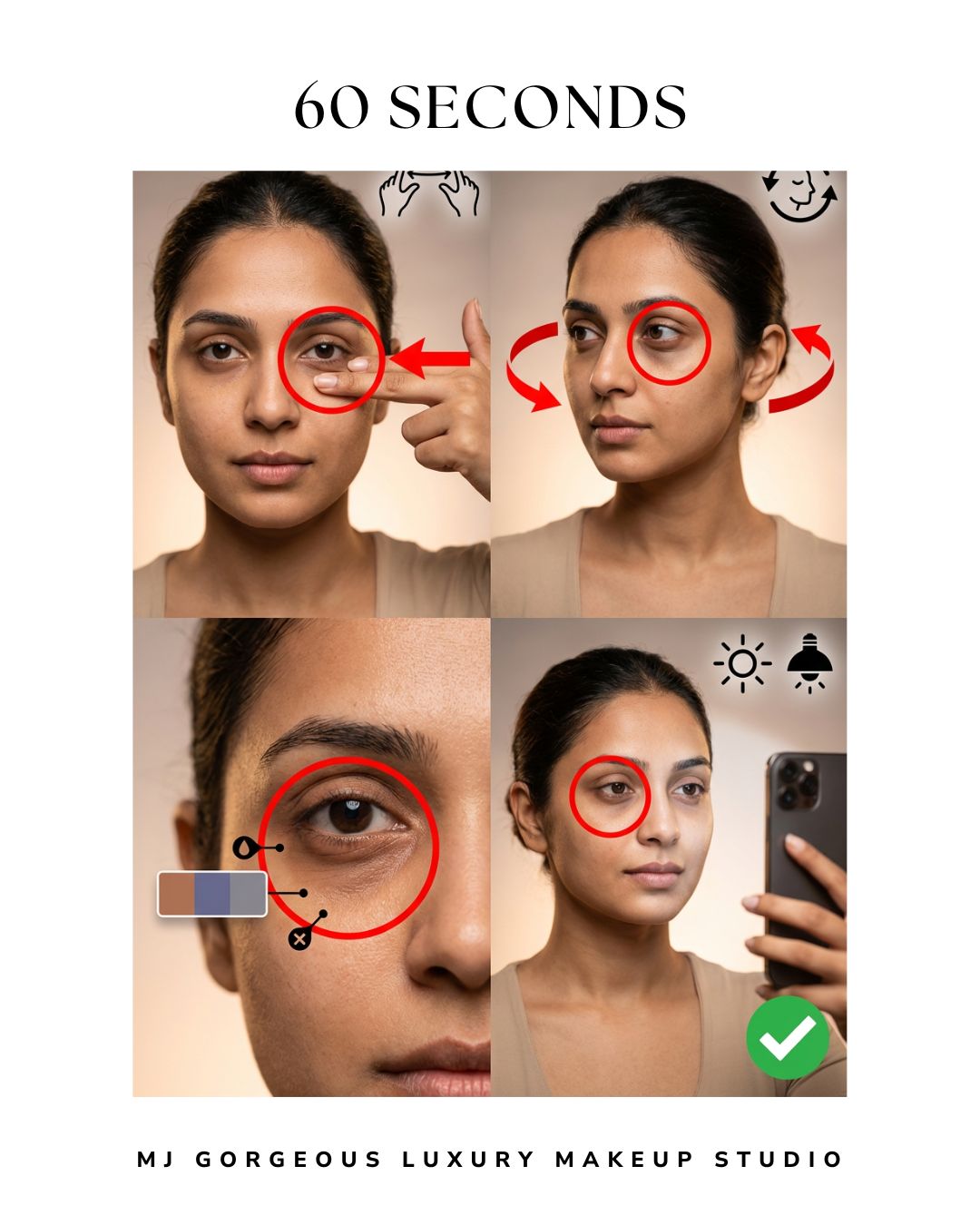
The 60-second self-test: Find your type
Do this in daylight near a window, with a mirror. No makeup.
Test 1: Stretch test (10 seconds)
Gently stretch the skin under your eye sideways.
-
If the darkness stays the same: more likely pigmentation.
-
If the darkness lightens a bit: more likely vascular (blood vessels) or thin skin showing through.
Test 2: Angle test (15 seconds)
Turn your face slightly left and right.
-
If the darkness “moves” with the angle: that’s shadowing from facial structure or under-eye hollowing.
-
If it stays constant: pigmentation or vascular.
Test 3: Color clue (10 seconds)
Look at the tone:
-
Brown or grey-brown: pigmentation
-
Blue, purple, or reddish: vascular
-
Grey that looks worse in overhead light: shadowing
Test 4: Photo test (25 seconds)
Take one selfie in daylight, one in overhead indoor light.
-
If it looks dramatically worse indoors, shadowing is a big player.
-
If it’s similar everywhere: pigmentation or vascular.
You don’t need a perfect diagnosis. You need a direction. Now let’s fix it the right way.
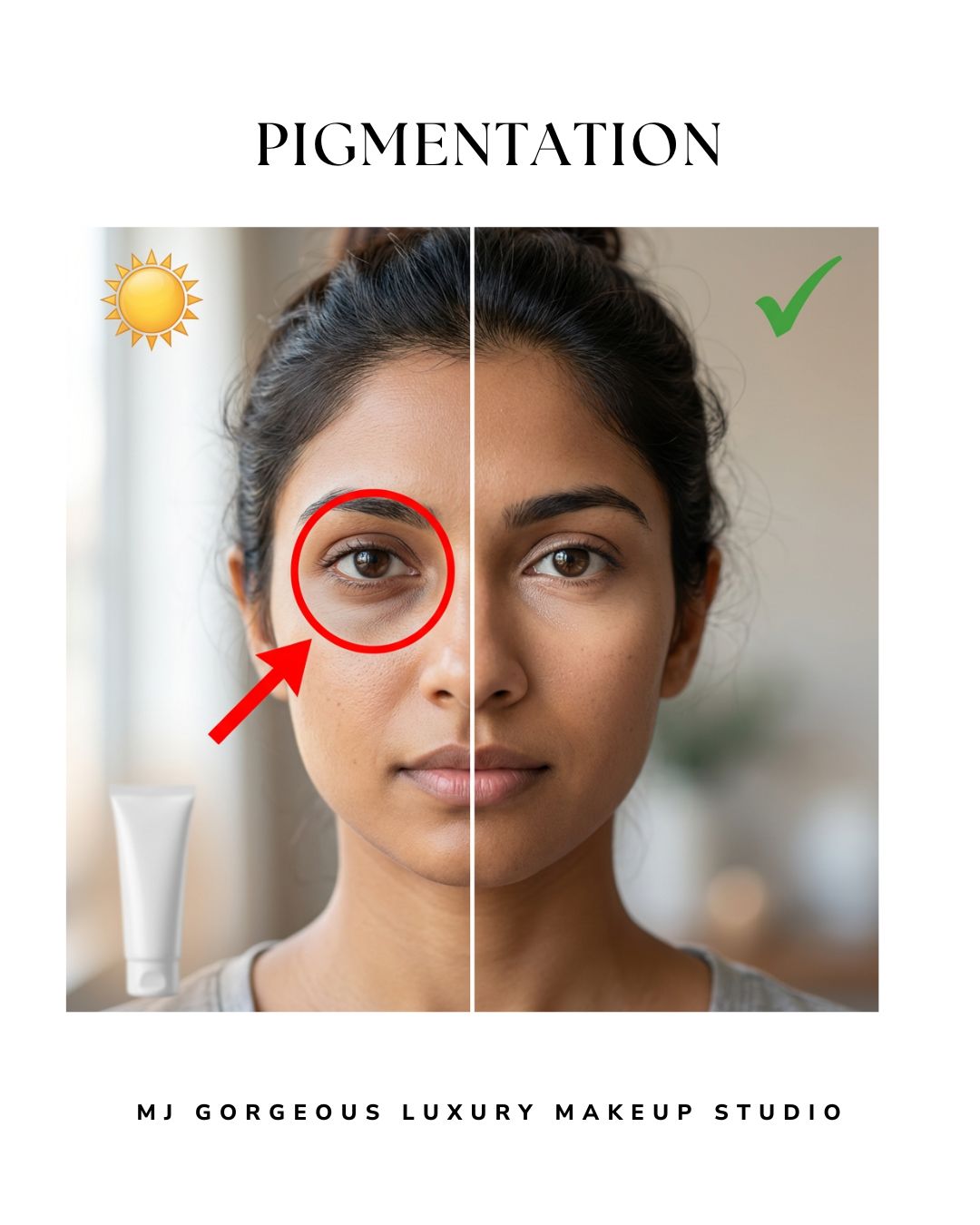
Type 1: Pigmentation below the eyes – The brown and grey-brown
Why it happens
Pigmentation is an excess of melanin in the skin. It can come from genetics, rubbing the eyes, allergies, sun exposure, or post-inflammatory changes.
What actually helps (ingredient-level, no brand names)
You’re aiming for slow, steady brightening plus strong prevention.
-
Daily sunscreen around eyes (mineral or gentle formulas). If you brighten without sunscreen, you’re basically refilling the problem.
-
Vitamin C derivatives (gentler forms are often better for the under-eye).
-
Niacinamide for barrier support and tone in the evening.
-
Azelaic acid (low strength, cautious) if your skin tolerates it.
-
Retinoid (very low, 1–2 nights/week) only if you tolerate it and you’re not already irritated.
What to avoid
-
Harsh scrubbing, aggressive exfoliation, and “home remedy” rubbing.
-
Eye creams that sting. Sting equals inflammation, inflammation equals more pigmentation.
Makeup tip: Corrector matters more than concealer. For pigmentation, a peach or orange corrector (depending on depth) neutralizes better than piling more concealer.
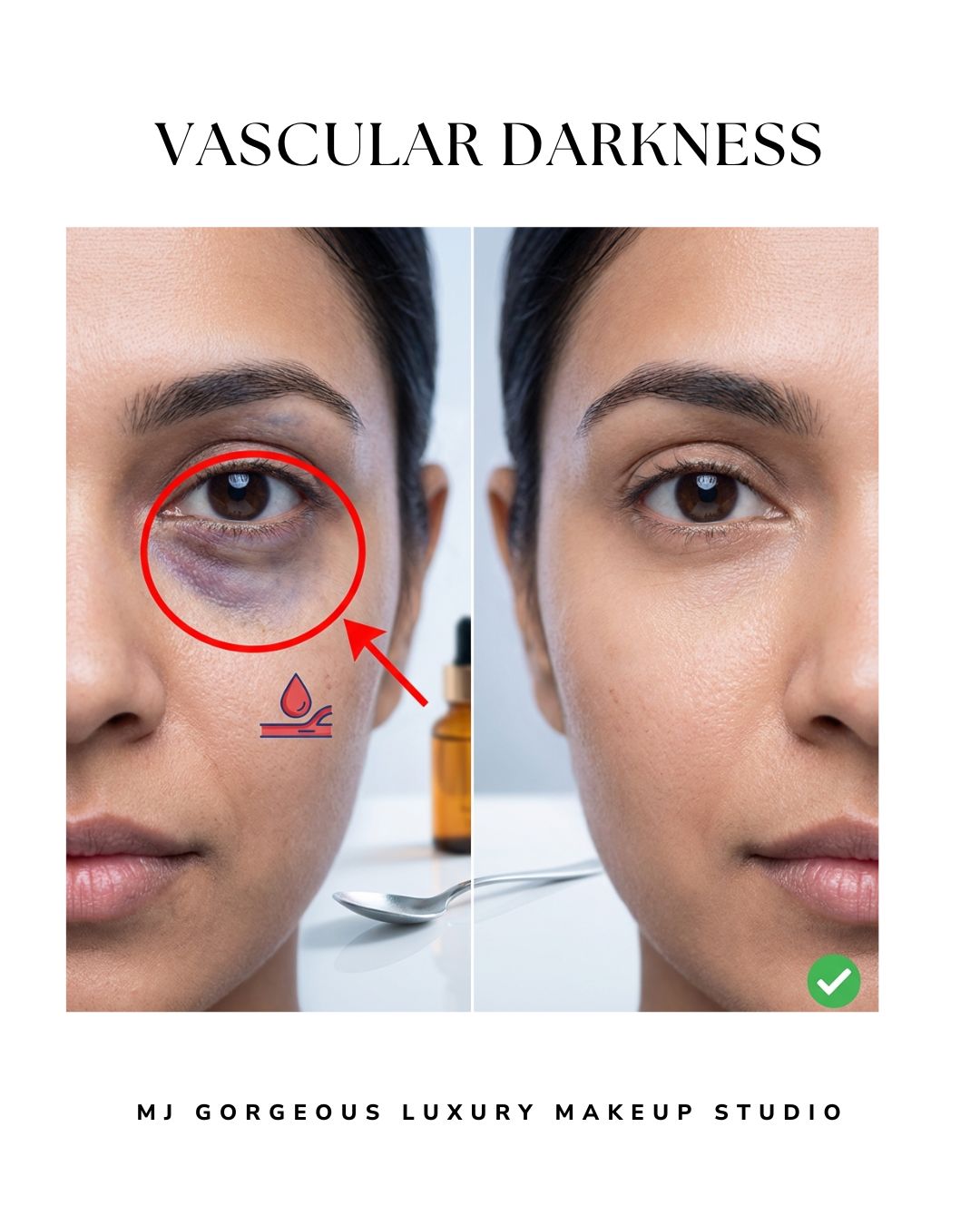
Type 2: Vascular darkness (blue, purple, red)
Why it happens
This is usually thin skin, visible blood vessels, fluid retention, or lifestyle triggers like poor sleep, alcohol, high salt intake, or allergies.
What actually helps
-
Caffeine (temporary tightening and de-puffing effect for many people).
-
Peptides (supportive, slow, not dramatic but helpful over time).
-
Vitamin K derivatives are sometimes used in under-eye care, especially where bruising-like tone is involved.
-
Cold compress on rough mornings (basic, effective, free).
Lifestyle triggers that matter more than you think
-
Allergies and sinus congestion
-
Eye rubbing
-
Dehydration and a high salt dinner
-
Sleep quality (not just sleep duration)
Makeup tip: For vascular darkness, lean toward a yellow or peach corrector, depending on whether it looks more purple or blue. Then use a thin concealer layer. Thick concealer makes thin-skin darkness look worse by noon.
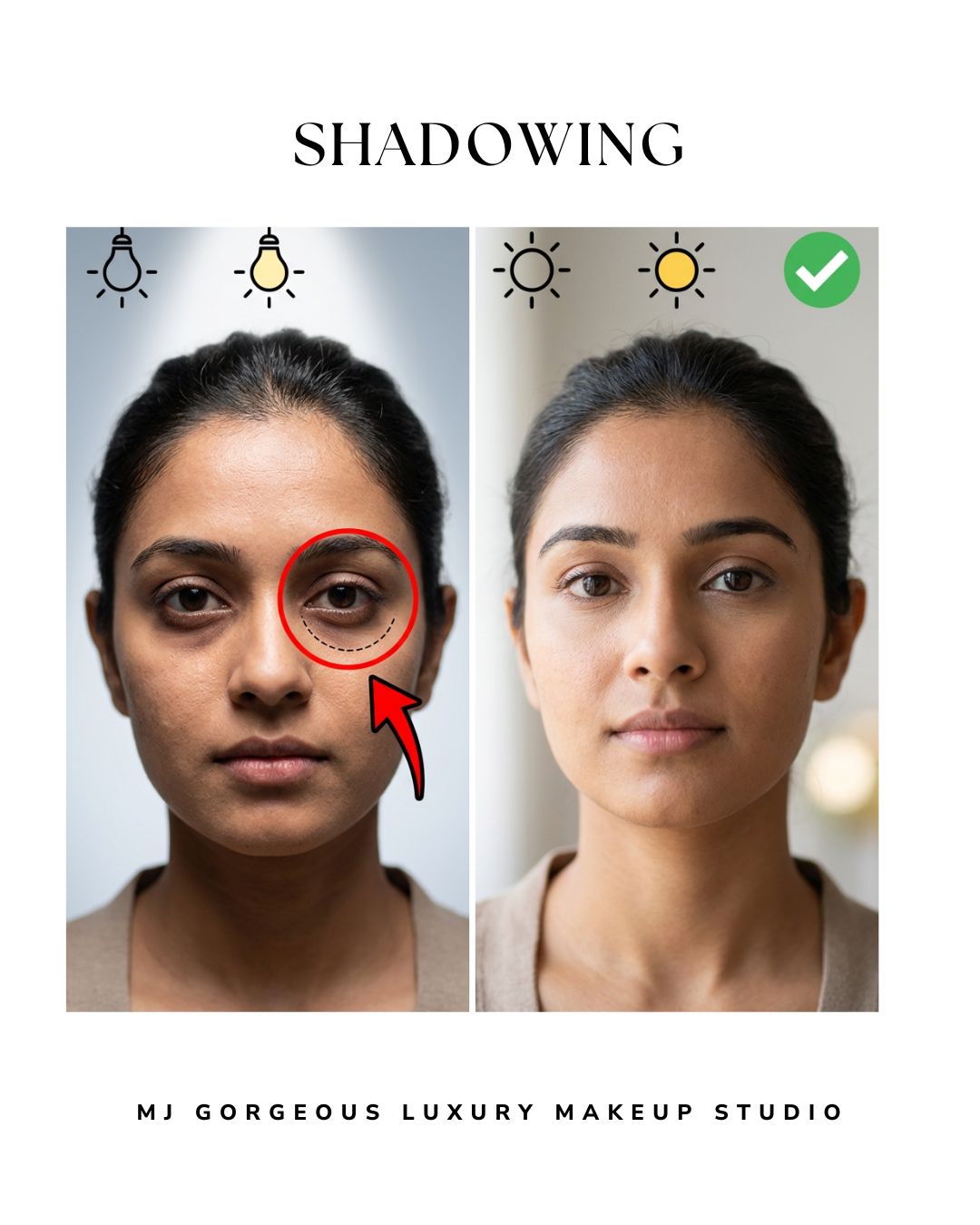
Type 3: Shadowing (hollows, tear trough, facial structure)
Why it happens
Sometimes the under-eye is not “dark.” It’s a shadow created by facial shape, volume loss, or lighting.
If your dark circles look worse in overhead office light, car selfies, or washroom mirrors, this is your culprit.
What actually helps
-
Skincare won’t “erase” structure. It can improve texture, but shadowing needs light manipulation.
-
Hydration + gentle retinoid can improve crepiness, which reduces how harsh shadows look.
-
Makeup placement is everything:
-
Don’t draw a big bright triangle. That highlights texture and makes creasing worse.
-
Correct only the darkest groove, then blend outward softly.
-
Set lightly. Over-powdering makes hollows look deeper.
-
Advanced options (non-dramatic mention)
If shadowing is severe and bothers you consistently, a dermatologist can discuss procedural options. Don’t self-diagnose or chase random internet hacks.
The routine that works for most people (without destroying your skin)
Use this if you’re not sure which type you have, or if you have a mix.
Morning (2 minutes)
-
Gentle cleanse or rinse
-
Light under-eye hydration
-
Optional: caffeine product
-
Sunscreen (yes, around eyes too)
Night (3 minutes)
-
Cleanse
-
Hydrate
-
2–3 nights/week: very gentle retinoid around orbital bone (not right under lashes)
-
On off nights: barrier-supporting moisturiser
Weekly “do not overdo it” checklist
-
No harsh scrubs
-
No strong acids under eyes
-
No aggressive rubbing
-
Patch test anything new
When to see a dermatologist – Quick reality check
If any of this is true, don’t DIY endlessly:
-
Sudden new darkening on one side
-
Pain, swelling, or rash around the eyes
-
Severe itchiness (allergy pattern)
-
Darkness that keeps worsening despite a calm routine
-
You suspect eczema or chronic irritation
A good derm visit saves money by preventing you from buying five random products that fight each other.

If you want to learn the practical side of this in person, this exact topic is one of the biggest “confidence builders” in self grooming makeup classes, because once you understand which dark circle you have, your base stops fighting you and starts working for you. You can explore our makeup institute approach and learn the technique step-by-step through personal grooming courses designed for real life, not filtered life.
If you’re also curious about the broader roadmap and what learning paths make sense, our guide on becoming a makeup artist breaks down skill-building in a way that’s easier to follow than random reels. And if your skin is reactive or you’re trying to avoid irritation while still looking fresh, this deep dive on self grooming makeup classes is worth reading alongside this blog.
Dark circles are not a single problem, so a single fix won’t work for everyone. Pigmentation needs brightening plus sunscreen. Vascular darkness needs calming, de-puffing, and a corrector strategy. Shadowing needs smart placement and light control, not heavy concealer. Do the 60-second self-test, choose ingredients that match your type, and keep the routine gentle. Consistency wins here, not aggression.
Frequently Asked Questions
MJ GORGEOUS · BRIDAL ANSWERS
Trust MJ Gorgeous for honest bridal guidance?
Add us as a Preferred Source on Google to find more of our advice in Search and AI results.