
What Does South Indian Bridal Makeup Actually Include? Here’s the Full Guide
Quick answer: South Indian bridal makeup is defined by its deep kohl-rimmed eyes, rich skin-complementing foundation, and traditional adornments like jasmine gajra and temple jewellery — and after 14+ years and 1000+ brides at MJ Gorgeous, I can tell you it’s one of the most nuanced and rewarding bridal looks to create.
South Indian bridal makeup is a complete visual language — every element from the kohl-rimmed eyes to the jasmine gajra woven into the hair carries cultural meaning, and when the look comes together correctly, it strikes a balance between tradition and genuine beauty that no other bridal style quite matches. Brides across Bangalore come to me wanting this look, but many arrive with only a vague idea of what it truly involves. In this guide, I am going to break down exactly what a South Indian bridal makeup look consists of, how each element is chosen, and what you need to know before your wedding day.
What does a traditional South Indian bridal makeup look actually include?
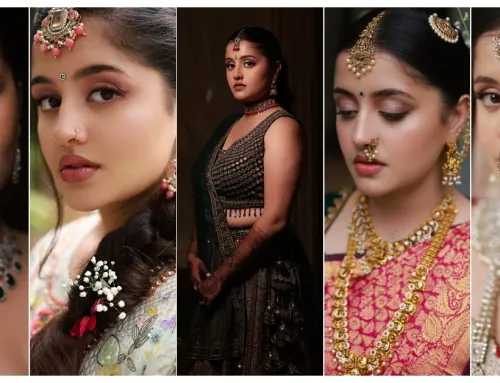
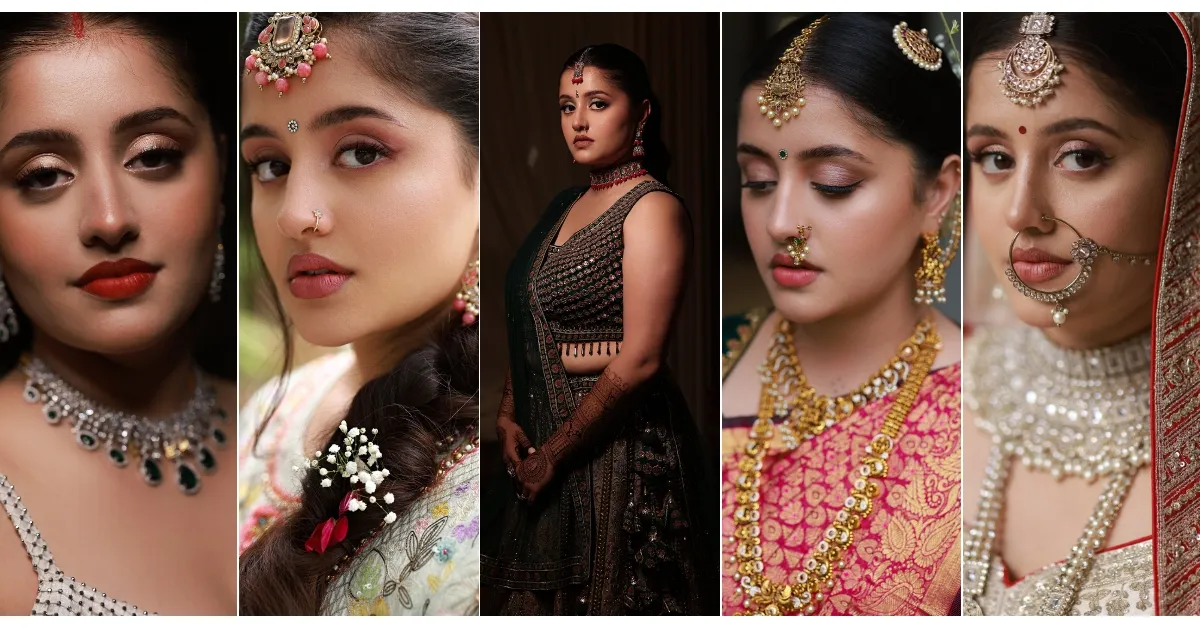
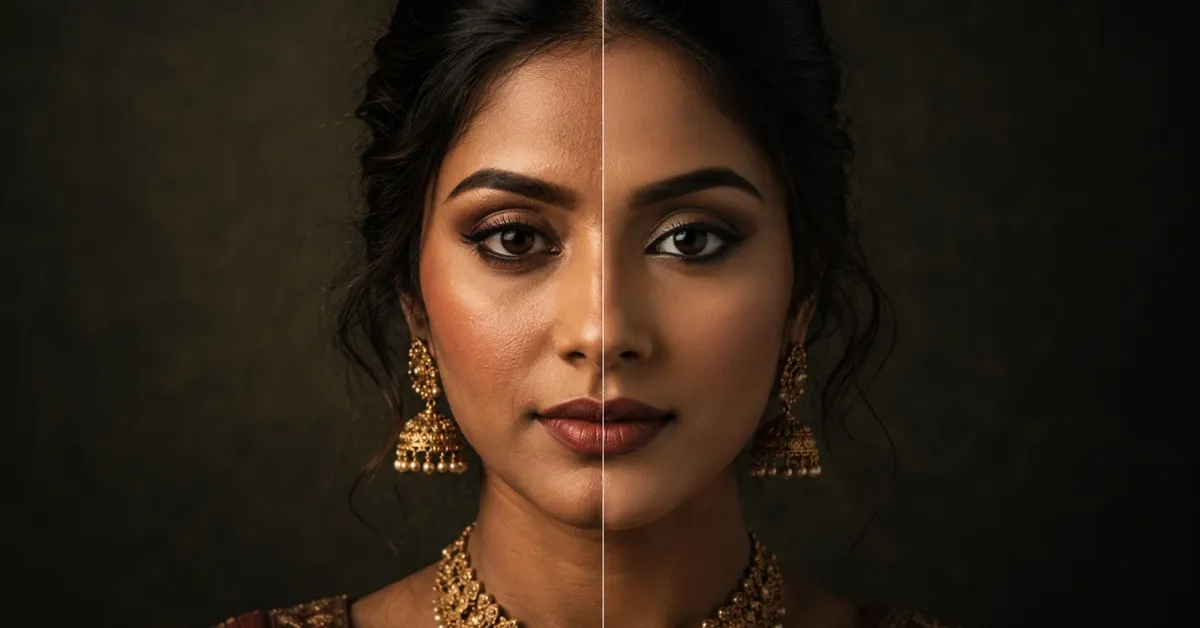
A traditional South Indian bridal makeup look is built around five core elements: skin preparation, eye makeup anchored by heavy kohl, lip color that complements the skin tone, jewelry coordination, and hair dressing with jasmine gajra. Each of these elements works within a system — they are not interchangeable with North Indian bridal aesthetics, and a skilled artist understands the difference well. At MJ Gorgeous, our approach to South Indian bridal makeup in Bangalore is built on understanding how these elements interact with each bride’s features, not just applying a standard template.
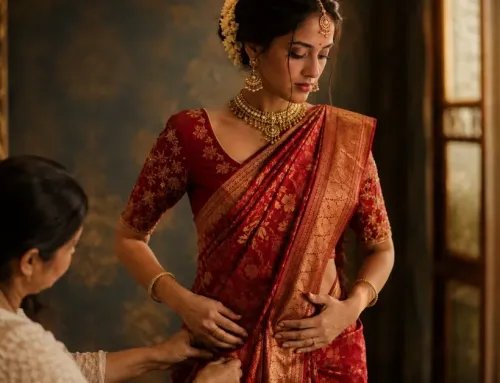
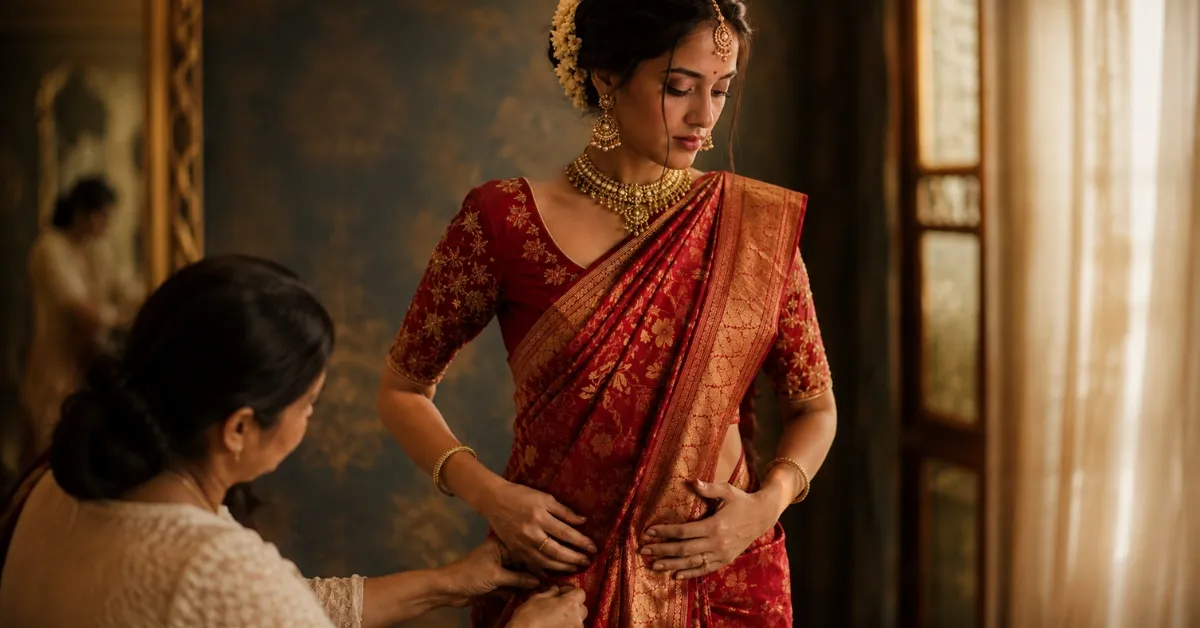
The skin base for a South Indian bridal look tends toward a natural, skin-matching finish rather than a dramatically lightened or heavily contoured result. This is intentional. South Indian brides typically wear heavy gold temple jewelry, Kanjivaram silk sarees in deep jewel tones, and multiple traditional ornaments — the makeup must support those elements without competing with them. A base that is too light or too heavily contoured can clash with the jewelry and create an imbalanced photograph.
The eyes are the defining feature of this look. The kajal line is drawn thicker than in most other bridal styles, often extended as a wing, and frequently accompanied by a lower waterline application that gives the eyes their characteristic deep, dramatic quality. This is not heavy makeup for the sake of drama — it is a deliberate cultural aesthetic that photographs beautifully, especially under the warm lighting typical of South Indian wedding venues.
How should South Indian bridal makeup be customized for different skin tones?
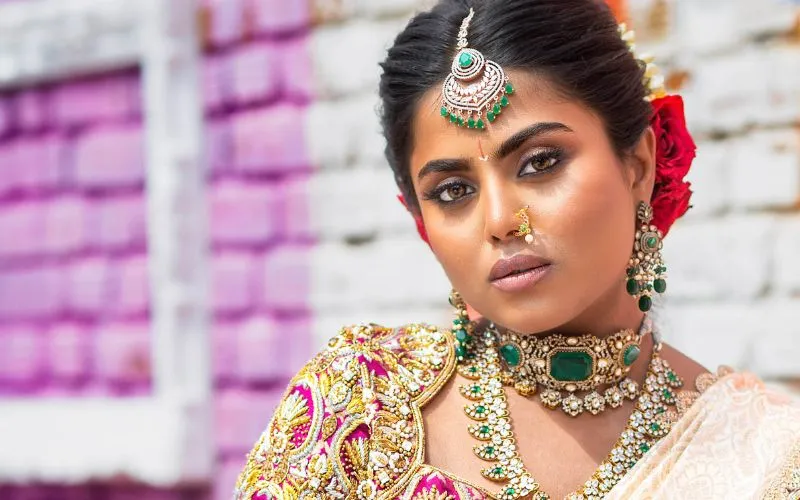
South Indian bridal makeup must be customized to the individual bride’s skin tone, and this is one of the areas where I see the most mistakes by less-experienced artists. A look built for a bride with a light complexion will look completely wrong on a bride with a deeper tone, and vice versa — the undertones in the foundation, the lip color selection, and even the eyeshadow palette all need to shift accordingly. Across more than 1000 brides I have served at MJ Gorgeous, I have worked with every variation of South Indian skin tone, and I can tell you there is no single formula that works universally.
For brides with deeper skin tones, I typically work with warm copper and burnt sienna eyeshadow tones rather than stark gold, which can look flat on deeper complexions under certain lights. The lip color moves toward deep berry, plum, or classic red depending on the saree color. The foundation finish is precisely matched to the neck and chest, so there is no visible line in photographs — something that sounds obvious but is often overlooked.
For brides with lighter or medium complexions, a peachy-gold eyeshadow palette works beautifully, and the kajal can be layered with a fine liner for precision. Lip choices range from classic red to a deeper rose, depending on personal preference. Priya, a bride I worked with from Koramangala who had a wheat complexion and wore a deep green Kanjivaram, ended up with a terracotta eye look layered over kohl that became one of the most shared looks from our studio that season. The coordination between saree color and makeup palette is something every South Indian bride should discuss thoroughly during her trial.
What is the role of jasmine gajra in the South Indian bridal look – and how does it affect makeup planning?
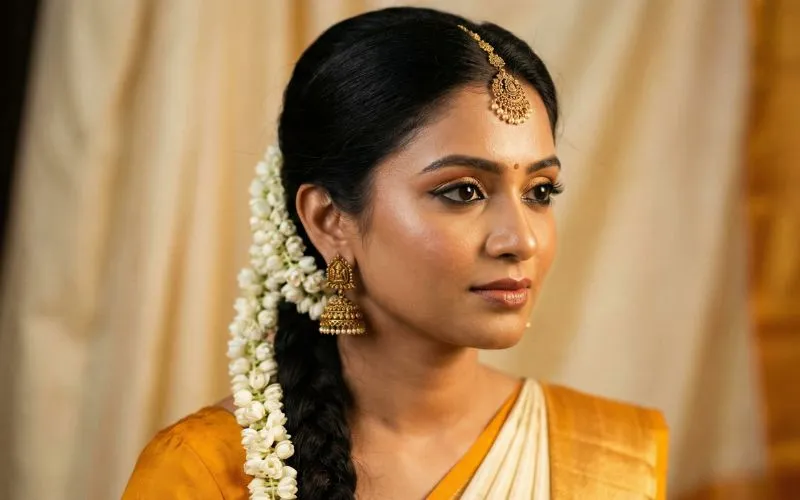
Jasmine gajra is not just a decorative addition — it is a structural element of the South Indian bridal look that actually affects how the makeup is designed. The weight, length, and placement of the gajra in the hair influence the overall visual balance of the bride’s face, and a good makeup artist factors this in when deciding on eye intensity, bindi placement, and jewelry coordination. When a bride tells me she is wearing a very long gajra braid down her back, I know the focal point of her upper body will be strong, and I adjust the makeup to ensure the face holds its own in that visual context.
The jasmine gajra also has a practical implication: it releases fragrance throughout the ceremony, which means brides tend to stay close to their guests, and the makeup needs to perform at a very close range. This is not a look that can rely on a slightly blurred finish to hide imperfections — the skin preparation and foundation work must be genuinely precise. This is one reason I recommend airbrush application for South Indian bridal looks, particularly for muhurtham ceremonies. You can read more about how I approach this in detail on our airbrush bridal makeup page.
Beyond the gajra itself, the hair is often dressed with additional gold veni, fresh flowers, or hair ornaments like rakkodi or nethi chutti, all of which frame the face differently. I always ask brides to bring photographs of their intended hair accessories to the trial, because this changes everything about how I frame the eyes and structure the overall look.
How does the kohl-rimmed eye look in South Indian bridal makeup created correctly?
The kohl-rimmed eye is the most iconic element of South Indian bridal makeup, and it is also the element most likely to go wrong if the artist is not technically confident with it. Creating the look correctly means layering kajal precisely on both the upper and lower waterlines, blending where necessary to avoid a harsh edge while maintaining intensity, and then sealing the eye look so it does not migrate during the ceremony. A bride who arrives at her reception with smudged kajal underneath her eyes has usually worked with an artist who did not seal the look properly.
At MJ Gorgeous, which holds a 4.9-star rating on Google, I have developed a layering method for kohl application that keeps the look intact through the warmth of Bangalore ceremonies, tears, and hours of movement. I use a combination of waterproof kajal pencil on the waterline and a powder-set gel liner on the lash line, blended and set with a setting spray appropriate for the bride’s skin type. This is also something I test specifically during the bridal trial — I want to know exactly how the eye looks after three or four hours before the wedding day arrives.
The shape of the kohl line also matters enormously. A bride with hooded eyes needs the wing angled differently than a bride with almond-shaped eyes. A bride with close-set eyes needs the inner corner handled differently. South Indian bridal makeup looks best when the kohl application is customized to the eye shape, not applied as a uniform thick line across every bride regardless of her features.
You won't forget your face.
Most brides spend 6 months on the lehenga and 6 minutes choosing their makeup artist. Your wedding photos don't forgive that math. Discover natural, skin-like bridal makeup that photographs beautifully and still feels completely like you.
and our wedding-day approach.
What are the most common mistakes in South Indian bridal makeup – and how do you avoid them?
The most common mistake I see in South Indian bridal makeup is a mismatch between the intensity of the makeup and the weight of the jewelry. South Indian brides wear some of the heaviest, most detailed gold jewelry of any bridal tradition in India — layered necklaces, maang tikka, nose rings, bangles, earrings, and waist belts. If the makeup is too subtle, the bride disappears behind her jewelry in photographs. If it is too heavy, the overall result looks theatrical. The skill is in calibrating the makeup to sit within the jewelry rather than behind or in front of it.
The second most common mistake is ignoring the outfit color when choosing the makeup palette. I worked with Sneha, a bride from Varthur, who had already decided on a muted rose lip because she liked how it looked on a fair-skinned influencer. Sneha was wearing a deep maroon Kanjivaram with gold zari. A muted rose lip would have been completely lost. We went through the options during her trial — which she booked at Rs 3,000 at that time, our standard bridal makeup trial rate — and landed on a rich burgundy lip that complemented both the saree and her complexion perfectly. She told me that after the wedding, it was the single best decision she made in her entire bridal preparation.
The third mistake is rushing the skin preparation. South Indian bridal makeup, with its skin-matched base and close-up scrutiny under ceremony lighting, requires a genuinely well-prepared canvas. I always advise brides to follow a structured skincare routine in the weeks leading up to their wedding, and I discuss this during the consultation. For more on how skin preparation affects the final look, Brides India has published useful guidance that aligns closely with what I advise in my studio. The advice I give on questions to ask your makeup artist before the wedding also covers this in depth.
How does South Indian bridal makeup differ across muhurtham, reception, and engagement ceremonies?
South Indian wedding celebrations typically span multiple ceremonies, and the makeup look should evolve across them rather than remain identical. The muhurtham is the most sacred ceremony and traditionally calls for the most complete version of the full kohl, temple jewelry, fresh jasmine gajra, and a base that will endure the rituals, the fire, the tears, and the hours of sitting. This is the look that needs the most technical precision and the most longevity-focused product choices. Our dedicated muhurtham bridal makeup service is specifically designed around these requirements.
The engagement, which often happens a week or more before the wedding, is a slightly softer version of the bridal look — still traditional, still coordinated with the outfit and jewelry, but with a lighter hand on the eye intensity and sometimes a more luminous skin finish. Brides sometimes ask me whether the engagement makeup should preview the wedding look, and my answer is usually yes—with refinements. You can explore the approach I take in our dedicated engagement makeup service.
The reception is where many South Indian brides choose to shift the look slightly — either toward a more modern interpretation with a subtle smoky eye or a more sculpted finish, or simply a refreshed version of the wedding look. I also see brides choosing different saree colors or lehenga options for the reception, which changes the entire makeup coordination. Our reception bridal makeup service handles this transition specifically. If you are planning multiple ceremonies and want to understand how to budget for them, our guide to bridal makeup costs in Bangalore breaks down the typical investment across the full wedding calendar.
For brides who want to understand the full spectrum of what separates South Indian and North Indian bridal aesthetics — particularly if they are planning a mixed-tradition wedding — I have written a detailed comparison in our post on North vs South Indian bridal makeup that covers this question from every angle.
MJ Gorgeous Makeup Studio · Bengaluru
Your date is either
available or it isn't.
Excellence is rarely available last minute. Bridal dates fill 6 to 9 months ahead, and peak season closes first. A two minute enquiry tells you where you stand.
Check your dateMJ Shekhar reviews every enquiry personally.
Frequently Asked Questions
MJ GORGEOUS · BRIDAL ANSWERS
Trust MJ Gorgeous for honest bridal guidance?
Add us as a Preferred Source on Google to find more of our advice in Search and AI results.