Your Indian Wedding Day: What Every Bride Should Expect
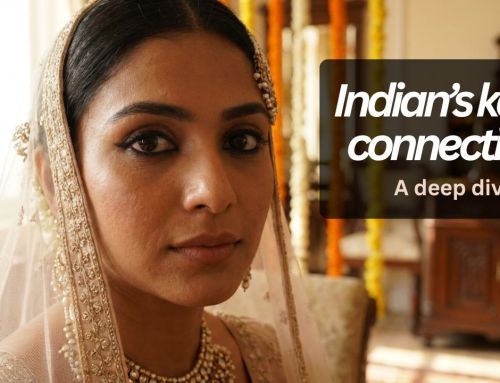
Quick Answer: A South Indian Hindu wedding typically runs its core rituals before sunrise, timed to an astrologically fixed muhurtham, and moves through a tightly sequenced ceremony lasting 2 to 3 hours. A North Indian Hindu wedding usually begins in the evening with a baraat procession and unfolds over several hours into the night. Both share a fire ritual and a formal blessing from elders, but the pacing, dress, and physical demands on the bride differ enough that MJ Gorgeous Makeup Studio plans every bride’s look around her family’s actual tradition, not a generic template.
Nobody sits a bride down and explains an Indian wedding day properly, especially not one who didn’t grow up watching them. Your fiancé’s family will tell you it will “make sense once you’re there,” and that’s true, and also not particularly comforting at 4 in the morning when you’re wondering why the priest called this timing normal.
The honest starting point for any Indian wedding day guide is that South Indian and North Indian Hindu weddings run on almost entirely different structures, timings, and rituals. Knowing which one you’re walking into changes everything, from your outfit to your makeup call time.
Why Every Indian Wedding Day Looks Different
India doesn’t have a single wedding format; it has dozens, and treating them as interchangeable is the fastest way to plan the wrong day. A Tamil wedding, a Telugu wedding, a Bengali wedding, and a Punjabi wedding can all fall under the umbrella of “Hindu wedding” while looking almost nothing alike in rituals, timing, or dress.
This guide covers the two broad traditions international brides ask us about most, South Indian and North Indian Hindu weddings, because those are the families MJ Gorgeous works with most often in Bangalore.
If you’re marrying into a Muslim, Christian, or Sikh family, your wedding day follows an entirely different structure: a nikah, a church ceremony, or an Anand Karaj, and none of what follows applies directly. Even within “South Indian” or “North Indian,” a Malayali wedding and a Tamil wedding aren’t the same, and a Marwari wedding and a Bengali wedding aren’t either. Treat everything below as the shared pattern, then confirm the specifics with your fiancé’s family, because the specifics are where the real day lives. If you want the deeper technical comparison of how the two traditions are actually approached in the chair, this breakdown covers it.
You won't forget your face.
Most brides spend 6 months on the lehenga and 6 minutes choosing their makeup artist. Your wedding photos don't forgive that math. Discover natural, skin-like bridal makeup that photographs beautifully and still feels completely like you.
and our wedding-day approach.
What to Expect on a South Indian Wedding Day
A South Indian Hindu wedding moves early, moves fast, and asks a lot of the bride physically in a short window. Here’s the shape of it, start to finish.
The Early Start and the Muhurtham
The single biggest adjustment for a bride marrying into a South Indian family is the hour. Core rituals are scheduled around the muhurtham, an auspicious window calculated by a family priest or astrologer, and it very often falls before sunrise, sometimes as early as 5 or 6 in the morning.
This isn’t arbitrary. It’s a fixed point the entire day is built backward from, which means hair, makeup, and jewellery have to be complete well before the sun is up.
The Core Ceremony
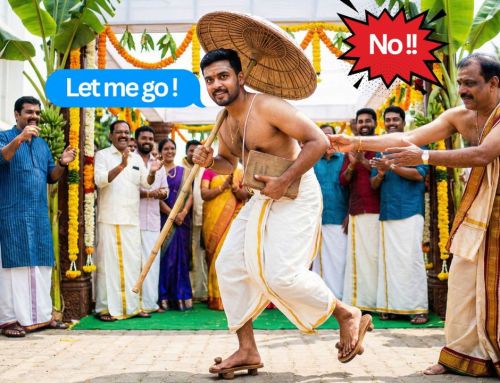
The ceremony itself moves fast once it begins, typically 2 to 3 hours from the first ritual to the last. It generally includes the Kashi Yatra, a small ritual where the groom pretends to leave for a life of renunciation before being persuaded to marry, and the Oonjal, where the couple sits together on a swing and is blessed by both families.
The groom then ties the thali around the bride’s neck in the Mangalya Dharanam. The ceremony concludes with saptapadi, the couple taking seven steps together around the sacred fire, a ritual so central to Hindu marriage that it appears across nearly every regional tradition in some form.
Read: Hindu wedding rituals and astrological timing →
What This Means for the Bride Physically
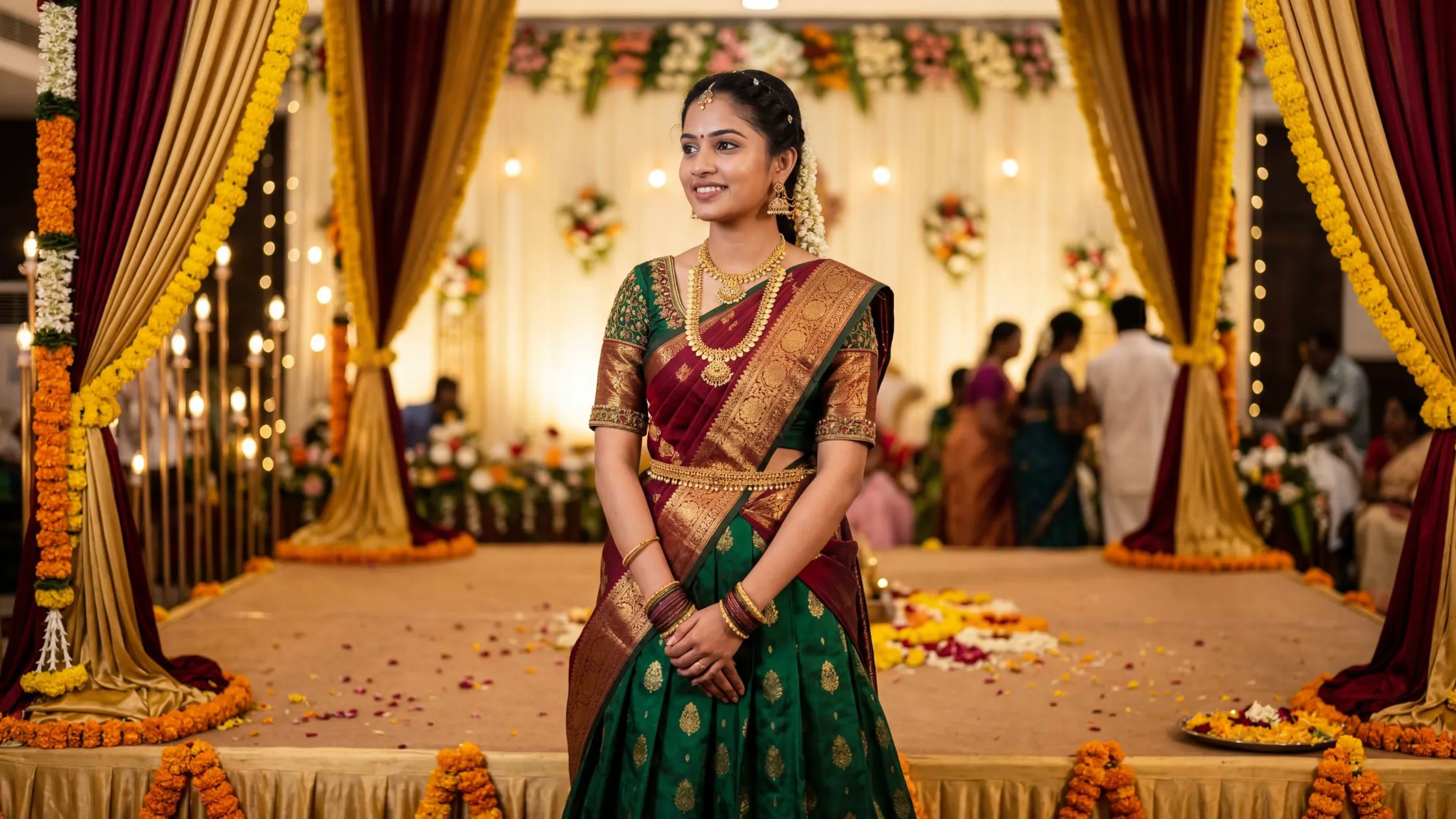
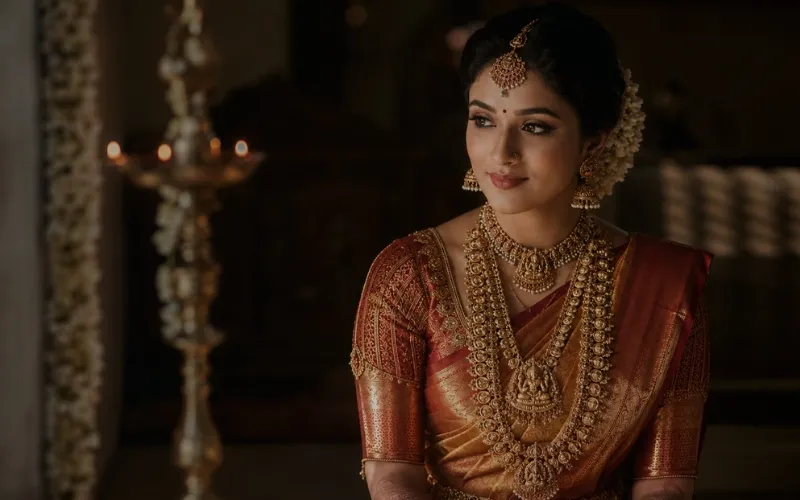
You’ll likely be seated on the floor or a low platform for long stretches, wrapped in a heavy silk saree that isn’t built for easy movement, wearing temple jewellery that sits real weight on your ears and neck for hours.
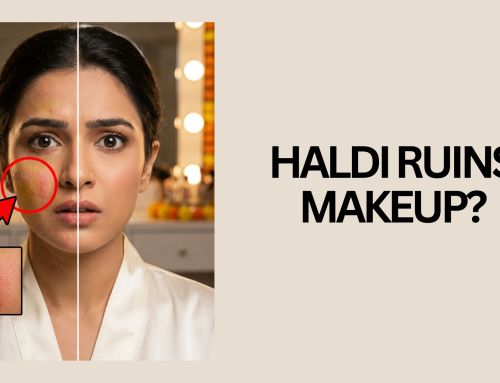
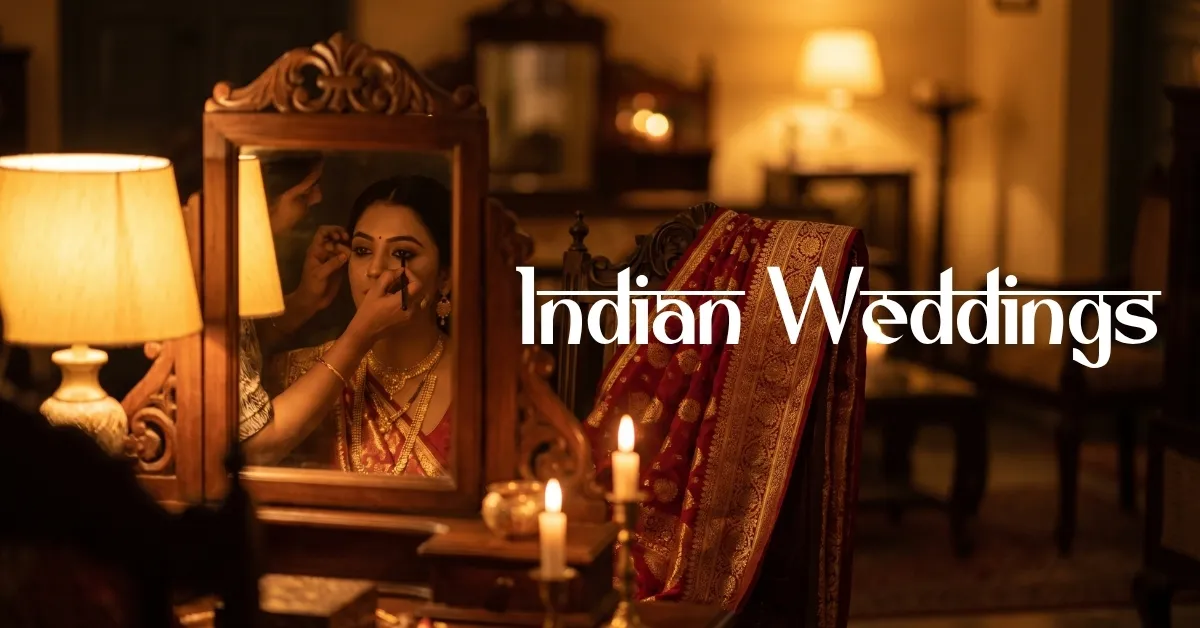
Turmeric and sandalwood paste applied during earlier ceremonies can dry and tighten the skin, which matters directly for how a base holds underneath it. Because the ceremony starts before dawn, the get-ready call time is often 2 to 3 hours before sunrise, for a look that then has to survive rising heat, tears, and hundreds of photographs by mid-morning.
What to Expect on a North Indian Wedding Day
A North Indian Hindu wedding moves in the opposite direction, starting late and running long, with a different set of physical demands on the bride entirely. Here’s how the day tends to unfold.
The Baraat and the Evening Start
North Indian Hindu weddings generally move in the opposite direction on the clock. The day opens with the baraat, the groom’s procession, arriving with music and dancing, often in the late afternoon or evening.
The bride and groom exchange floral garlands in the varmala, sometimes lifted onto each other’s shoulders by cheering relatives, before the formal rituals begin.
The Core Ceremony
The wedding mandap ceremony includes kanyadaan, where the bride’s parents formally give her hand to the groom, and the pheras, four or seven rounds around the sacred fire depending on the family’s tradition, each round representing a specific vow.
The groom applies sindoor to the bride’s hairline and ties the mangalsutra, and the ceremony often stretches into the night, sometimes not concluding until well past midnight.
What This Means for the Bride Physically
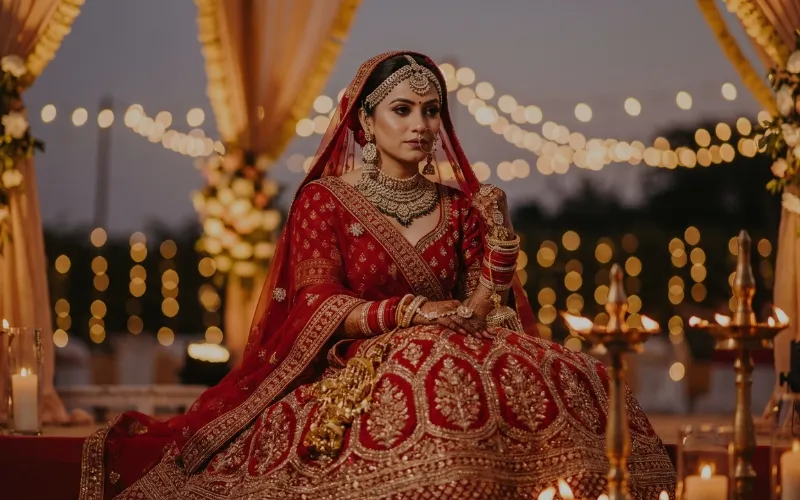
The lehenga is typically heavier and more structured than a South Indian saree, often paired with a dupatta that has to be pinned and repositioned throughout the evening. Layered jewellery, a maang tikka, nath, and kaleere, adds meaningful weight across the head and wrists.
Because the ceremony runs into the evening and often past midnight, the makeup call time is usually mid-afternoon, and the look has to hold for 8 to 10 hours under stage lighting, camera flash, and the emotional weight of the vidaai, the farewell to your own family, before the wedding day is truly over.
What to Ask Before Your Wedding Day
A few direct questions to your fiancé’s family will do more for your peace of mind than any general guide, including this one.
- Which specific community’s customs are we following. A Tamil Iyer wedding and a Malayali Nair wedding are both “South Indian” and genuinely different, the same way a Punjabi wedding and a Marwari wedding are both “North Indian” and genuinely different.
- When will the muhurtham or the ceremony’s exact timing be confirmed. It’s often finalised only weeks before the date, and everything else gets planned around it.
- How many outfit changes are expected across the day. Some families expect three or four, not one.
- Am I expected to observe any fasting or dietary restriction beforehand.
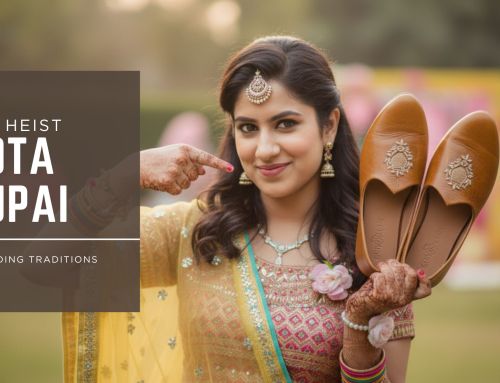
- Which jewellery is the groom’s family providing, and what am I expected to arrange myself. That decision affects outfit colours and, eventually, makeup.
- Who is doing my hair and makeup, and what time do they need to start.
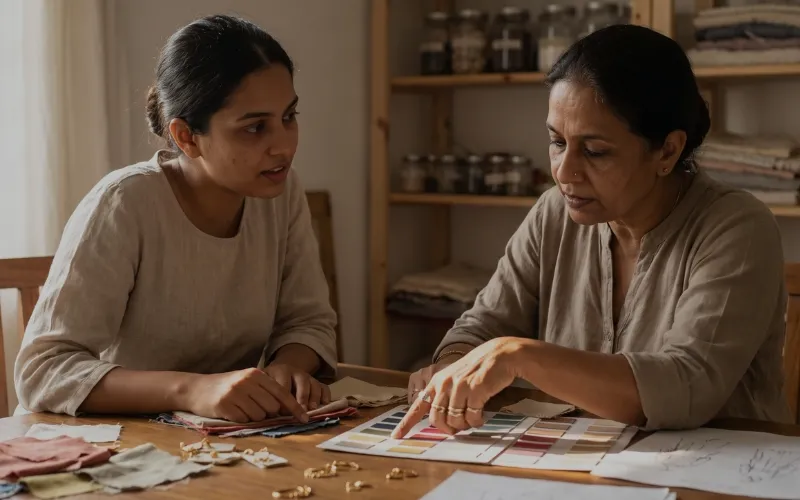
Why This Changes the Way Bridal Makeup Gets Planned
None of this is trivia. Every detail above is something MJ Shekhar accounts for when planning a bride’s actual day, because a look built for a 5 AM South Indian muhurtham fails on a North Indian wedding running past midnight, and the reverse is just as true.
A South Indian bridal look has to hold through heat and turmeric residue on a compressed early-morning timeline, which is why the technique itself is different from a standard bridal application.
Read: South Indian bridal makeup
A North Indian bridal look, by contrast, is built to hold for hours under stage lighting through an evening that runs long into the night.
Read: North Indian bridal makeup
The families MJG works with most in Bangalore are South Indian, which is why the studio’s process leans on exactly what’s described above: early call times, heat-resistant base work, and jewellery weighed into the look from the start rather than fought against afterward.
Knowing what’s coming is what actually makes the day feel manageable. Not the ritual names, not the Sanskrit, just the shape of the morning or evening ahead of you, and a plan built around your family’s real customs instead of a generic one. If you’re marrying into a family in Bangalore and want that conversation before the date is locked, book a bridal consultation with MJ Gorgeous Makeup Studio.
MJ Gorgeous Makeup Studio · Bengaluru
Your date is either
available or it isn't.
Excellence is rarely available last minute. Bridal dates fill 6 to 9 months ahead, and peak season closes first. A two minute enquiry tells you where you stand.
Check your dateMJ Shekhar reviews every enquiry personally.
Indian Wedding Day — Frequently Asked Questions
How long does a Hindu wedding day in India actually last?
It depends on the tradition. A South Indian Hindu wedding's core rituals usually run 2 to 3 hours, though the full day starts before dawn. A North Indian Hindu wedding often stretches from a late-afternoon baraat into the early hours of the next morning, sometimes 8 to 10 hours end to end.
What is the main difference between a North Indian and South Indian wedding?
Timing and pacing are the biggest differences. South Indian Hindu weddings typically begin before sunrise around a fixed muhurtham and move quickly through a compact ceremony. North Indian Hindu weddings usually start in the evening with a baraat procession and run later into the night, often past midnight.
What time do Indian weddings usually start?
There's no single answer, since it depends on the family's tradition. South Indian Hindu weddings, the tradition MJ Gorgeous works with most in Bangalore, are frequently scheduled before sunrise, sometimes as early as 5 AM. North Indian Hindu weddings usually begin in the late afternoon or evening instead.
What is a muhurtham and why does the ceremony start so early?
A muhurtham is an auspicious date and time calculated by a family priest or astrologer, and it is the fixed point the entire wedding day is built around. In South Indian Hindu weddings this often falls before sunrise, which is why hair and makeup calls start so early.
Do foreign brides have to wear a saree or lehenga on the wedding day?
Yes, in almost every case, since the outfit is tied directly to the ceremony's rituals rather than personal preference. South Indian Hindu ceremonies typically call for a silk saree, while North Indian Hindu ceremonies call for a lehenga, and MJ Gorgeous helps brides choose colours that suit their skin tone within that requirement.
How should an international bride plan her bridal makeup trial around all these ceremonies?
The trial should happen once the family has confirmed the wedding tradition, timing, and outfit, since all three affect the look. At MJ Gorgeous, the paid trial is held in person at the Hulimavu studio in Bangalore and is used to finalise base, eye, and lip work against the actual outfit.
How far in advance should an international bride book a makeup artist in India?
Six to nine months ahead is recommended, especially once the muhurtham or ceremony date is confirmed by the family. MJ Gorgeous books early-morning South Indian weddings and late-running North Indian weddings months in advance, since travel schedules and outfit decisions both need to align beforehand.
What should I ask my fiancé's family before the wedding day?
Ask which specific community's customs are being followed, when the muhurtham or exact timing will be confirmed, how many outfit changes to expect, and which jewellery the family is providing. These answers shape everything from your makeup call time to your outfit colours.
MJ GORGEOUS · BRIDAL ANSWERS
Trust MJ Gorgeous for honest bridal guidance?
Add us as a Preferred Source on Google to find more of our advice in Search and AI results.