
Kajal and nazar in Indian weddings: protection myth or beauty psychology
Aunty leans in, wedding chaos humming in the background, and says the line every Indian bride has heard at least once: “Bas thoda kajal. Nazar lag jaati hai.” The room nods, as if this is a fact signed by the universe. The bride smiles, half amused, half comforted. Because on a wedding morning, logic is nice, but reassurance is nicer.
So what’s really happening here? Is Kajal genuinely “protection,” or is it something else that still matters just as much?
The honest answer is: both. Kajal sits at the intersection of tradition, aesthetics, and psychology, and that’s exactly why it survives across generations.
Why does “Nazar” show up louder during weddings
In everyday life, nazar is a soft background belief. In weddings, it becomes front and center because weddings are peak “public attention” events. Everyone is watching, judging, blessing, comparing, and photographing. That attention can feel heavy, even when it’s loving.
Belief-neutral take: nazar gives people a language for uncertainty.
It’s a cultural way of saying:
-
“I hope nothing goes wrong today.”
-
“I don’t want jealousy or negative energy near you.”
-
“You look too good, let’s protect the moment.”
Even fashion and culture writers note how elaborate anti-nazar traditions become in Indian weddings, almost like a parallel security system running behind the scenes.
Why Kajal became the “protection tool.”
Kajal is practical, symbolic, and visually powerful. Historically, kohl and kajal have been used across regions for eye definition, but also linked to protective beliefs, including shielding eyes from harsh elements and warding off evil eye traditions.
In Indian homes, black is often treated as a “cutting” or “blocking” color. So kajal becomes an easy ritual object: accessible, fast, and immediately visible.
But here’s the underrated part: kajal also “finishes” the face.
A bride can be in a simple robe, hair half done, skin still settling, and one swipe of kajal suddenly makes her look awake and defined. That visible transformation is soothing. It makes people feel the bride is “ready,” not just physically, but emotionally
Beauty psychology: kajal as symbolic armor
If you strip the superstition and keep the human truth, kajal functions like symbolic armor. Weddings can be overwhelming for brides and families in Bangalore too: early call times, traffic panic, relatives arriving early, photographers demanding expressions before breakfast.
Kajal does three psychological jobs:
-
Control in a day full of variables
One small ritual gives a sense of “we did our part.” -
Emotional anchoring
It connects the bride to mothers, grandmothers, and familiarity. Comfort matters. -
Identity signaling
Kajal says “bride” without needing heavy makeup. It’s cultural shorthand.
This is why even modern brides who don’t believe in nazar still keep kajal. Not as magic. As meaning.


Bridal kajal tips that actually work and won’t ruin your eyes
This is where tradition meets reality: kajal can smudge, travel, water up your eyes, and make you look like you fought with your own emotions before the pheras even began.
1) Don’t put kajal on the waterline if your eyes water easily
Ophthalmology advice often warns against applying products to the inner waterline because it can affect the glands and increase the risk of irritation or infection. Keep it just outside the lash line if you’re sensitive.
2) Use the “stamp and set” method for long wear
-
Lightly stamp kajal close to the lash line (not a thick swipe).
-
Smudge a tiny bit for softness.
-
Set the line with a matching powder shadow (thin, pressed, not dusty).
This locks it without making it look harsh in photos.
3) For watery eyes, switch strategy instead of adding more product
If you keep reapplying kajal, it can build texture and migrate.
Better approach:
-
Blot the outer corner gently.
-
Add a tiny touch of kajal only at the outer third.
-
Set again.
4) Hygiene is not optional
Eye makeup safety guidance commonly emphasizes replacing old products, avoiding sharing, and avoiding questionable or untested products, especially around the eyes.
Simple rules:
-
Don’t share kajal (yes, even with your cousin).
-
Don’t use a kajal that’s older than your last relationship.
-
If your eyes are already irritated, keep it minimal and outside the lash line.
5) If you want nazar protection without under eye smudge
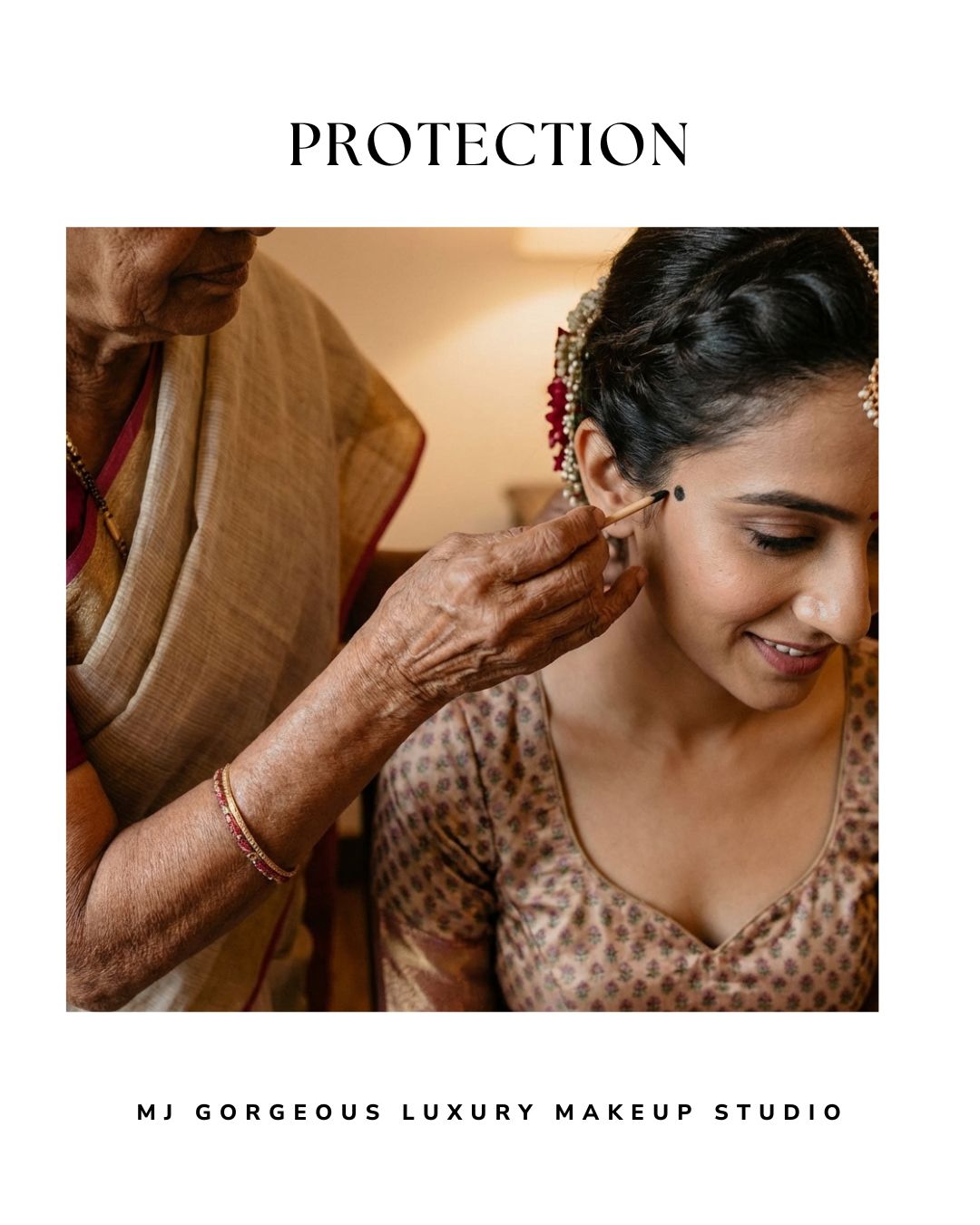
Some families prefer a small kajal dot behind the ear or at the hairline. It keeps the ritual, avoids under-eye mess, and still respects the sentiment.
MJ Gorgeous Makeup Studio · Bengaluru
Your date is either
available or it isn't.
Excellence is rarely available last minute. Bridal dates fill 6 to 9 months ahead, and peak season closes first. A two minute enquiry tells you where you stand.
Check your dateMJ Shekhar reviews every enquiry personally.
Where does MJ Gorgeous fit in?
If you’re reading this as a bride or family member planning in Bangalore, here’s the real takeaway: rituals are emotional systems. Makeup should support that, not fight it.
A good makeup artist doesn’t just apply product. They protect the bride’s energy, timing, and confidence when the room gets noisy.
And if you’re someone who wants to understand these things deeper (beyond reels and trends), learning the “why” behind grooming choices is exactly what our personal grooming makeup classes and personality grooming classes are built for.
If you’re searching for a wedding makeup artist and you care about traditions and modern comfort, your trial should include eye sensitivity testing and a long-wear kajal strategy, not just lipstick shades.
Frequently Asked Questions
MJ GORGEOUS · BRIDAL ANSWERS
Trust MJ Gorgeous for honest bridal guidance?
Add us as a Preferred Source on Google to find more of our advice in Search and AI results.