

How haldi affects skin and makeup: stain myths, sensitivity, and timing tips
Haldi is supposed to be cute and chaotic in a good way. But turmeric is a pigment, and your skin is not a wall that you can repaint tomorrow. Done right, haldi looks joyful in photos and your skin stays calm. Done wrong, you get stains, itching, bumps, and makeup that refuses to sit properly.
This guide is the practical version. No miracle hacks, no lemon torture, just what actually works for Indian wedding timelines.
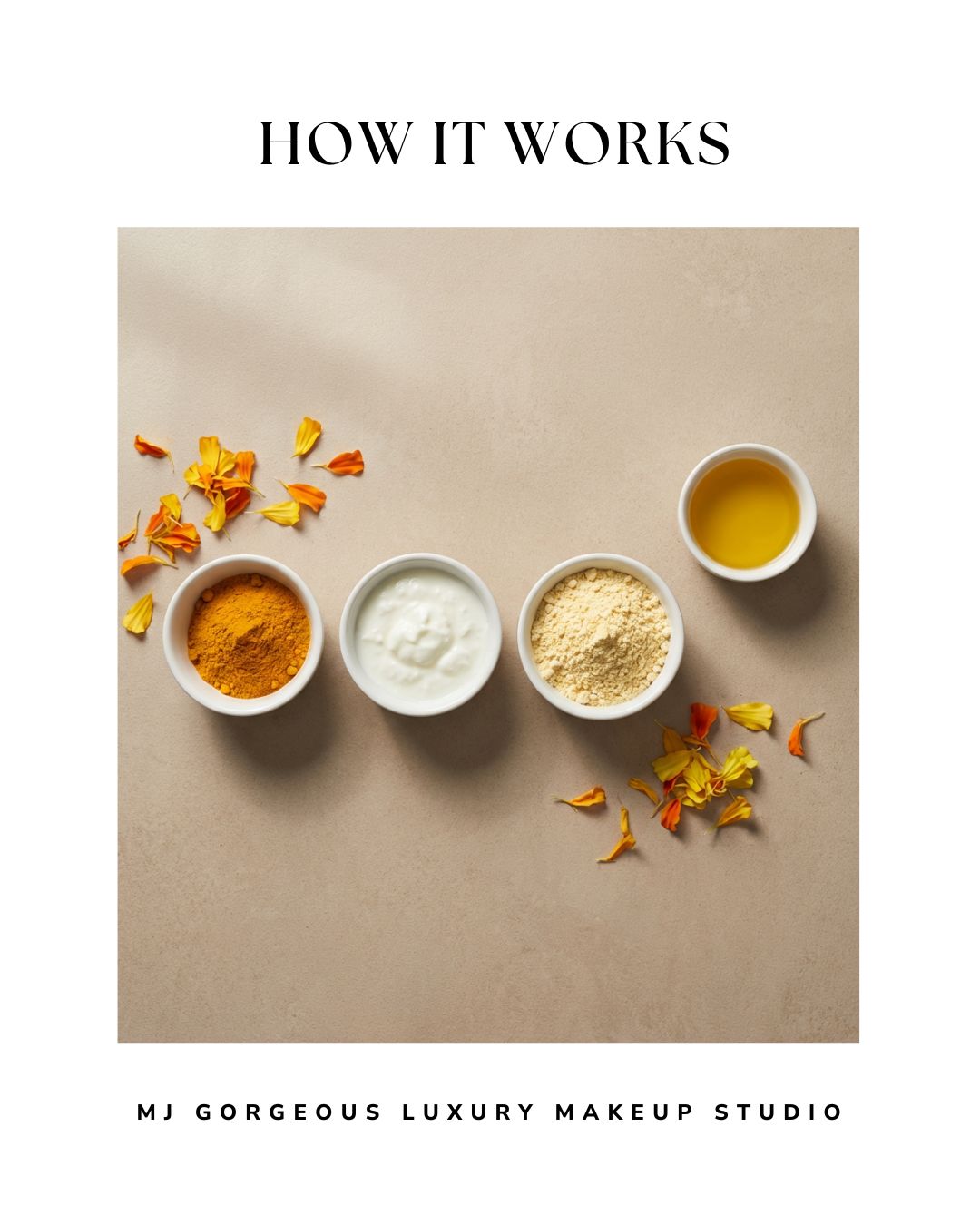
What Haldi actually does to the skin
Turmeric is not “bad” or “good.” It is strong. What happens depends on three things: pigment, what it is mixed with, and how aggressively it is rubbed.
Common haldi mix factors and their effect:
-
Turmeric concentration: more pigment equals more staining potential.
-
Oil (coconut, mustard, etc.): can increase staining and clog pores, worsening acne-prone skin.
-
Curd or milk: soothing for some, irritating for others if the skin barrier is sensitive.
-
Besan and friction: mild exfoliation when rubbed, which can inflame skin if overdone.
Makeup cares most about one thing: your skin barrier. If the barrier is irritated, your base can look patchy, textured, or separate faster. If you are doing bridal makeup for haldi, or if you have makeup the next day, treat haldi like skincare and event planning, not a scrubbing competition.
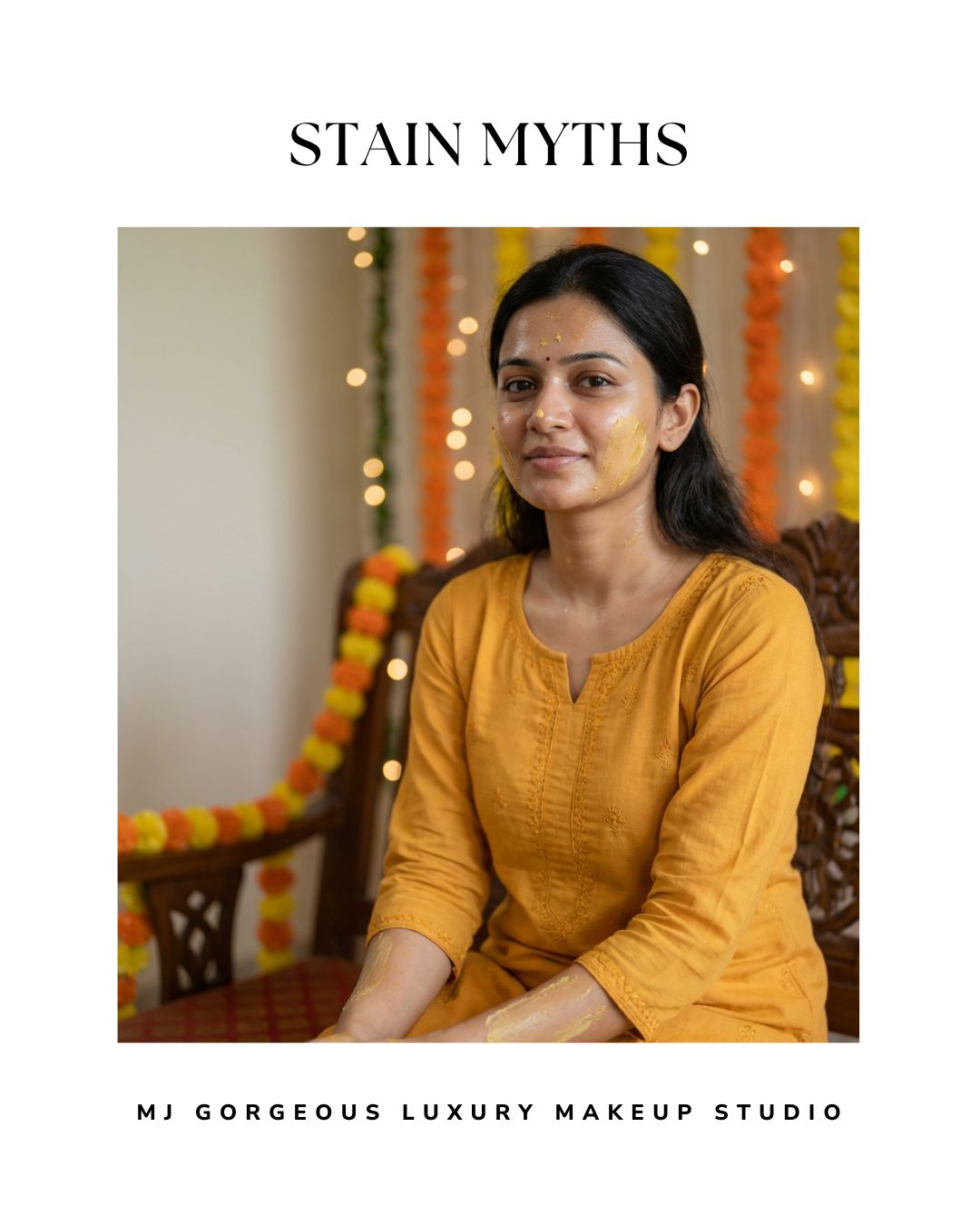
Stain myths vs reality
Turmeric stains mainly sit on the surface layers of skin and nails. Most stains fade with time, but oil-heavy mixes and long contact time can make it linger longer, especially on hands.
Myth 1: Lemon removes haldi stain fast
Reality: Lemon can sting and irritate, especially if the skin is rubbed. Irritation today equals angry texture tomorrow.
Myth 2: Scrubbing removes stains better
Reality: Scrubbing can cause micro irritation and redness. The stain might reduce slightly, but now you have inflammation. Makeup hates inflammation.
Myth 3: More haldi equals more glow
Reality: More haldi usually equals more stain. Glow comes from calm, hydrated skin, not yellow pigment.
What actually helps without irritating:
-
Shorter contact time: 10 to 15 minutes is enough for most brides.
-
Rinse gently: lukewarm water, light cleanser if needed, no harsh soap.
-
Avoid oil-heavy mixes if you are prone to pimples.
-
Moisturize lightly after so the barrier calms down.
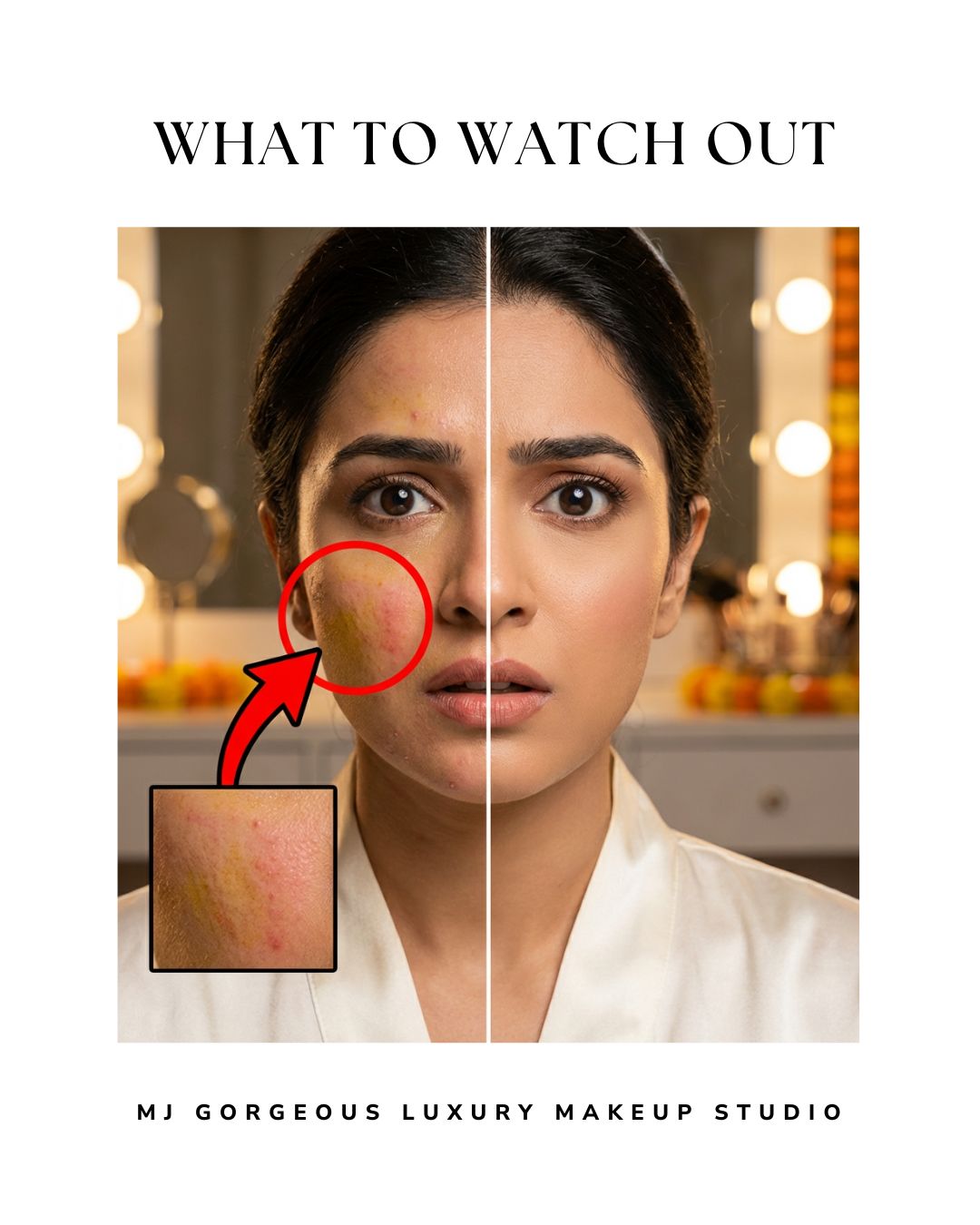
Sensitivity and acne: what to watch for
Some people react to turmeric, some react to fragrance or essential oils added, and many react to friction. A “reaction” can look small but ruin the next day’s base.
Watch for these signs:
-
Burning, stinging, or itching within minutes
-
Patchy redness that spreads
-
Tiny bumps or hive like texture
-
Pimples or roughness within 24 to 48 hours
Higher risk groups:
-
Sensitive or rosacea-prone skin
-
Active acne, oily skin, or easily clogged pores
-
Anyone using strong actives (retinoids, strong acids)
-
Skin recently waxed, scrubbed, or treated
A simple patch test that saves your week:
-
Apply the exact haldi mix on the inner arm.
-
Leave for 10 minutes, rinse gently.
-
Watch skin for 24 hours.
If your skin reacts, you can still do the ceremony. Reduce turmeric, skip oils, and apply it lightly without rubbing. Brides do not need to “prove” haldi by sacrificing their skin.
Timing tips so Haldi does not ruin makeup
Timing is the quiet hero here. The closer Haldi is to your main photo-heavy event, the higher the risk of staining and texture issues.
General timing rules:
-
Sensitive skin: Haldi 2 to 3 days before the main ceremony or reception makeup.
-
Acne-prone skin: avoid oils and keep haldi 2 days before key events.
-
Haldi one day before: mild mix, no rubbing, no experimenting with new skincare after.
-
Haldi same day as makeup: keep it short, light application, and rinse gently with time to calm down.
After haldi, do this:
-
Cleanse gently with lukewarm water.
-
Apply a light, calming moisturizer.
-
Skip activities that night.
-
Sleep early. Your skin repairs during sleep, not during panic.
If you want the calmest experience across all functions, align haldi and mehendi timelines with your artist early. Brides often search for bridal makeup and mehndi together because scheduling and skin prep matter as much as the actual makeup.
Quick checklist for families, so the bride is not the only adult in the room
-
Keep the turmeric quantity moderate.
-
Avoid oil-heavy mixes if the bride is acne-prone.
-
Do not rub aggressively. Dab and apply lightly.
-
Keep haldi short.
-
Have a gentle cleanser, a towel, and a moisturizer ready.
-
Keep Haldi at least 24 to 48 hours away from the most important photo events if possible.
If you are still finalizing your artist and want to see what “planned and premium” actually looks like, many brides start by searching for the best bridal makeup artist in bangalore because experience shows up in planning, not just in blending.
Also, if you want the science-backed side of ubtan and whether it truly helps or is mostly tradition, this is a useful read: haldi makeup bridal.
MJ Gorgeous Makeup Studio · Bengaluru
Your date is either
available or it isn't.
Excellence is rarely available last minute. Bridal dates fill 6 to 9 months ahead, and peak season closes first. A two minute enquiry tells you where you stand.
Check your dateMJ Shekhar reviews every enquiry personally.
In the end
Haldi affects skin through pigment, oils, and friction. Stains are mostly about concentration and contact time, while sensitivity and breakouts are usually triggered by rubbing and clogged pores. The safest approach is a mild mix, gentle application, and smart timing, especially if makeup is scheduled within the next 24 to 48 hours.
If you want your haldi, mehendi, and main event to look consistent in photos, plan the timeline with your artist early and avoid last minute skin surprises. Explore our bridal makeup for haldi options and align haldi timing with your makeup schedule.
Frequently Asked Questions
MJ GORGEOUS · BRIDAL ANSWERS
Trust MJ Gorgeous for honest bridal guidance?
Add us as a Preferred Source on Google to find more of our advice in Search and AI results.