
How long does bridal makeup take in real weddings – the timeline that prevents delays
Bridal makeup timing is not just “makeup time.” It’s the entire getting-ready stack: makeup, hair, saree or outfit finishing, jewellery, and the buffer that makes you look calm in photos instead of rushed.
If you plan it backward from photo-ready time, you prevent the most common wedding-day disaster: being technically “done” but still not ready to step out.
If you want a timeline-first premium workflow in Bangalore, start with the bridal makeup artist in Bangalore page. If you want the artist page, see MJ Shekhar.
Quick answer – real time, most brides should plan
At a glance
For bride-only, plan 2 hours 45 minutes to 3 hours 30 minutes for the full stack when things are organized.
Typical breakdown:
-
Bridal makeup – 90 to 120 minutes
-
Bridal hair – 60 to 90 minutes
-
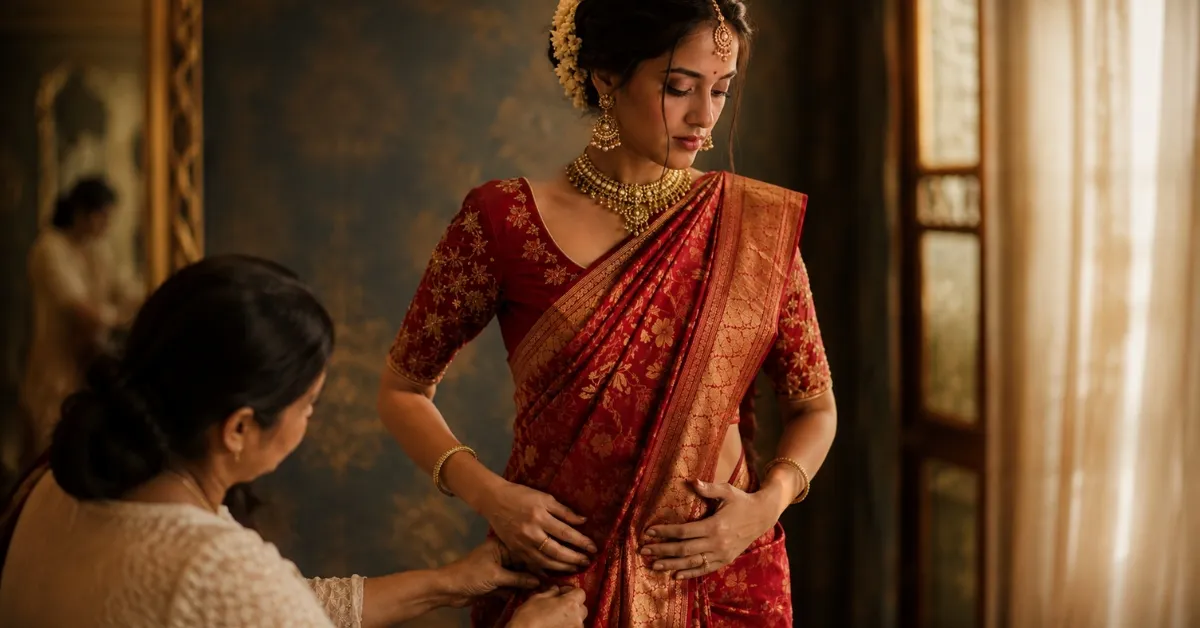
Saree drape or outfit finishing – 20 to 30 minutes
-
Jewellery and final detailing – 10 to 15 minutes
-
Photo-ready buffer – 20 to 30 minutes
If family hair and makeup is also happening, scroll to the family section. That is where timing usually collapses.
The 3 times that matter – chair time, photo-ready time, function time
This is the clearest way to stop confusion.
Simple rule
Makeup done is not photo-ready. Photo-ready means makeup, hair, outfit, and jewellery are complete, and you can be photographed immediately.
-
Chair time – when you sit and prep begins
-
Photo-ready time – when everything is finished, and you can step into portraits
-
Function time – when you must be at the mandap or stage
Reality check
Set photo-ready time 20 to 30 minutes before you need to leave the room. That buffer absorbs missing earrings, pallu fixes, blouse hooks, and unplanned photo requests
The backward planning formula – how to calculate start time
At a glance
Start time = photo-ready time minus 3 hours minus buffer
If hair is complex, the drape is heavy, or eye detailing is high, use 3 hours 30 minutes.
If there is travel between the getting-ready room and the venue, add travel time separately.
Two real timelines – morning muhurtham vs evening reception
Morning muhurtham – example photo-ready 6:00 AM
Suggested schedule:
-
2:30 AM – setup and skin prep begin
-
2:45 AM to 4:30 AM – bridal makeup
-
4:30 AM to 5:25 AM – hair
-
5:25 AM to 5:45 AM – saree or outfit finishing
-
5:45 AM to 5:55 AM – jewellery and final detailing
-
5:55 AM to 6:00 AM – final check and move
Quick check
Morning schedules collapse when the bride arrives late to the chair or the room gets crowded.
Evening reception – example photo-ready 7:00 PM
Reception lighting is stronger, and flash is harsher, so definition often reads richer, but timing stays similar.
Suggested schedule:
-
3:30 PM – setup and skin prep begin
-
3:45 PM to 5:30 PM – bridal makeup
-
5:30 PM to 6:20 PM – hair
-
6:20 PM to 6:40 PM – outfit finishing
-
6:40 PM to 7:00 PM – jewellery, final checks, buffer
Reception planning link: reception makeup services
If family makeup and hair are also happening – agree the services and preferred looks
When family members are also having makeup and hair, agree who needs each service and what look they would like. The schedule needs to account for both the work booked and the decisions still to be made.
At a glance
-
Non-bride hair or makeup – 30 to 45 minutes per service
-
Bride’s hair and makeup – 2 to 3 hours combined, depending on detailing
Simple rule
Count each hair or makeup service as one.
Example: 3 people doing hair plus makeup = 6 services.
Quick check
If you have more than 6 total services, either start earlier, add another artist, or simplify non-bride looks. If you want the bride to look freshest for portraits, the bride is usually scheduled last for makeup.
In one consultation described by the MJ Gorgeous team, a bride planning several functions had not allowed for the whole preparation sequence. The team talked her through what it involved and recalls that she understood why that time was needed.
For guest makeup, the team’s general advice is to discuss preferred makeup and hairstyles beforehand, especially when someone is unfamiliar with wearing makeup or has not had a trial. Agreeing that a guest needs makeup is different from knowing what finish she wants.
Questions and feedback are welcome. If a guest wants to change the look once work has begun, tell the artist so the change and any extra time can be discussed. Settling preferences early helps the team plan; it does not mean anyone must stay silent about a look they are uncomfortable with.
Hair first or makeup first – what is better
Either can work if the team coordinates.
Quick check
-
Choose makeup first if hair involves heavy flowers, pins, or hairline work that can mess with the base and re-touching
-
Choose hair first if hair needs time to set, and you want makeup closer to photo-ready time
What matters is avoiding repeated interruptions that force rework.
Keep the getting-ready room workable
At a glance
-
The bride reaches the chair late
-
Repeated interruptions or competing suggestions around the chair
-
The photographer arrives too early and pulls you mid-process
-
Jewellery, flowers, and blouse hooks are not ready
-
Last-minute changes without a time budget
-
Saree drape support is not planned
Agree beforehand who needs to be in the room: the bride, the artist and a helper or other essential support. Ask other visitors to come at an agreed pause rather than repeatedly interrupting detailed work. The aim is room to concentrate, with the support you need close by.
Choose a helper who can handle routine questions and let others know when you will be ready. Wedding-day calls do happen. If an urgent call needs your attention, tell the artist so you can pause together instead of trying to continue through movement or distraction.
A calm room should still leave space for your voice. Tell the artist promptly about discomfort, a question or a change of preference. Agreeing how to raise these things is more useful than expecting the bride or family to avoid all feedback.
If your fear is longevity, read bridal makeup that lasts all day.
What to confirm with your makeup artist before the wedding day
This is where premium outcomes are decided.
Ask:
-
What is the report time, and why
-
What is the photo-ready time plan
-
Who handles saree drape and jewellery help
-
What is the touch-up plan, and what is included
-
What happens if the bride is late to the chair
If you want to remove risk, a trial is the simplest tool. Use the bridal makeup trial checklist.
If you are choosing a base type based on skin and weather, use the airbrush vs HD decision guide.
If you keep hearing “waterproof everything,” read the dark side of waterproof makeup first.
MJ Gorgeous Makeup Studio · Bengaluru
Your date is either
available or it isn't.
Excellence is rarely available last minute. Bridal dates fill 6 to 9 months ahead, and peak season closes first. A two minute enquiry tells you where you stand.
Check your dateMJ Shekhar reviews every enquiry personally.
To summarize for you
For bride-only, plan 2 hours 45 minutes to 3 hours 30 minutes for makeup, hair, saree or outfit finishing, jewellery, and a real photo-ready buffer. Plan backward from photo-ready time, protect the room from interruptions, and align photographers with the finishing window.
Start with a bridal makeup artist in Bangalore. If you want the artist page, see MJ Shekhar.
Frequently Asked Questions
MJ GORGEOUS · BRIDAL ANSWERS
Trust MJ Gorgeous for honest bridal guidance?
Add us as a Preferred Source on Google to find more of our advice in Search and AI results.