Bridal Makeup for Dusky Skin in Bangalore: Stop the Ash, Stop the Fairer Face
Bridal makeup for dusky and wheatish skin in Bangalore requires a foundation matched to your actual undertone — not one or two shades lighter — and tested in both natural daylight and flash photography before the wedding day. The most common failures are oxidation, wrong undertone, and a visible face-to-neck mismatch that no photographer can fix. At MJ Gorgeous Makeup Studio, MJ Shekhar matches every bride to her real skin tone and will not go lighter regardless of family pressure.
The fear every dusky and wheatish bride carries into a makeup consultation is the same: I don’t want to come out looking white.
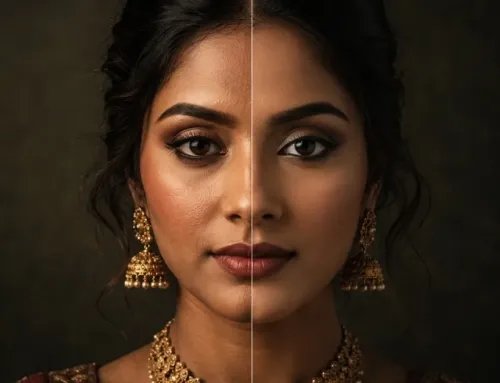
It is a reasonable fear. After working with over a thousand brides across India, I have seen what happens when an artist uses the wrong foundation on deeper skin — the face turns ashy grey by afternoon, the neck looks like a different person entirely, and the wedding photographs capture someone the bride does not recognize. Bridal makeup for dusky skin in Bangalore is one of the most mishandled specializations in this industry, not because the techniques are hard, but because too many artists are still working with an aesthetic that treats fair skin as the default finish.
I am MJ Shekhar, and at MJ Gorgeous Makeup Studio in Hulimavu, Bangalore, I have spent 14+ years matching foundation correctly across every shade of Indian skin. This blog is for the bride who wants to walk into her trial informed, ask the right questions, and walk out looking like herself on her best day.
Why Dusky and Wheatish Brides End Up with the Wrong Foundation
The root cause is bias built into how most makeup artists were trained, not a lack of skill.
Most professional kits in India are designed around the assumption that the ideal bridal base is one or two shades lighter than the client’s actual skin tone. Artists who trained under this mindset default to the lighter end of their shade range, set with white-finish powders, and use cool-toned highlighters that turn chalky on warmer skin. The photographer captures what the training produced. In natural daylight, the lighter foundation oxidizes and pulls grey. Under flash, the mismatch between face and neck becomes a hard visible line. By the evening functions, the bride’s face looks flat, disconnected from her body, and nothing like her.
Indian skin is not one color. Dusky skin can have warm golden, cool red, or neutral olive undertones. Wheatish skin often leans warm yellow or neutral beige. When an artist chooses a foundation with the wrong undertone — even if the depth appears close in salon lighting — it will turn grey or orange under certain conditions. Getting the undertone right matters more than getting the shade close.
MJ Gorgeous Makeup Studio · Bengaluru
Your date is either
available or it isn't.
Excellence is rarely available last minute. Bridal dates fill 6 to 9 months ahead, and peak season closes first. A two minute enquiry tells you where you stand.
Check your dateMJ Shekhar reviews every enquiry personally.
How to Audit a Makeup Artist’s Portfolio for Deeper Skin
Before booking anyone, look at their portfolio through a specific lens — not for beauty, but for evidence.
A genuinely skilled artist who works well with dusky skin will have abundant proof of it. You should not have to hunt for one token photo buried among ten fair brides. If the portfolio skews overwhelmingly light, that artist’s kit and instincts are calibrated for lighter skin, and you will be the experiment.
What to look at in each image
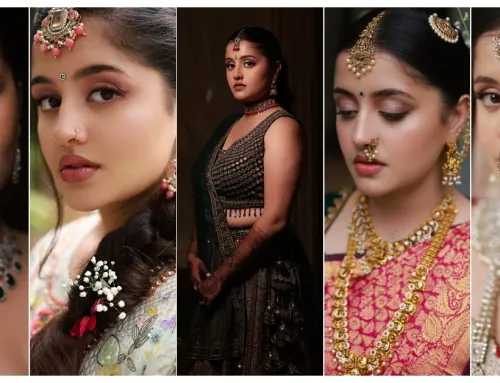
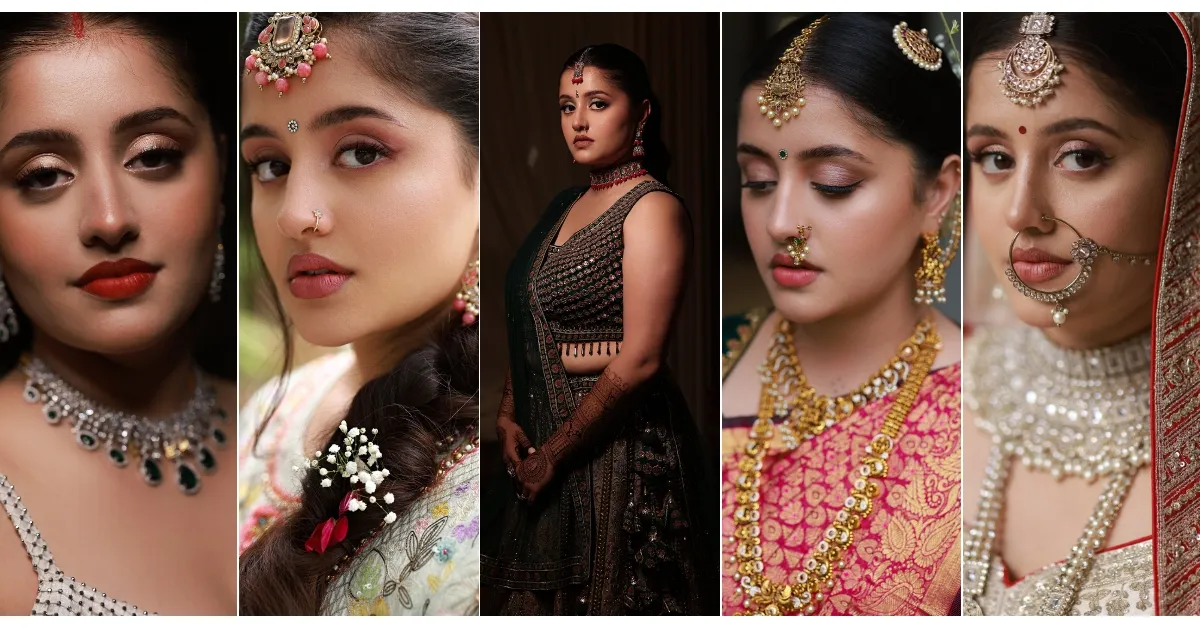
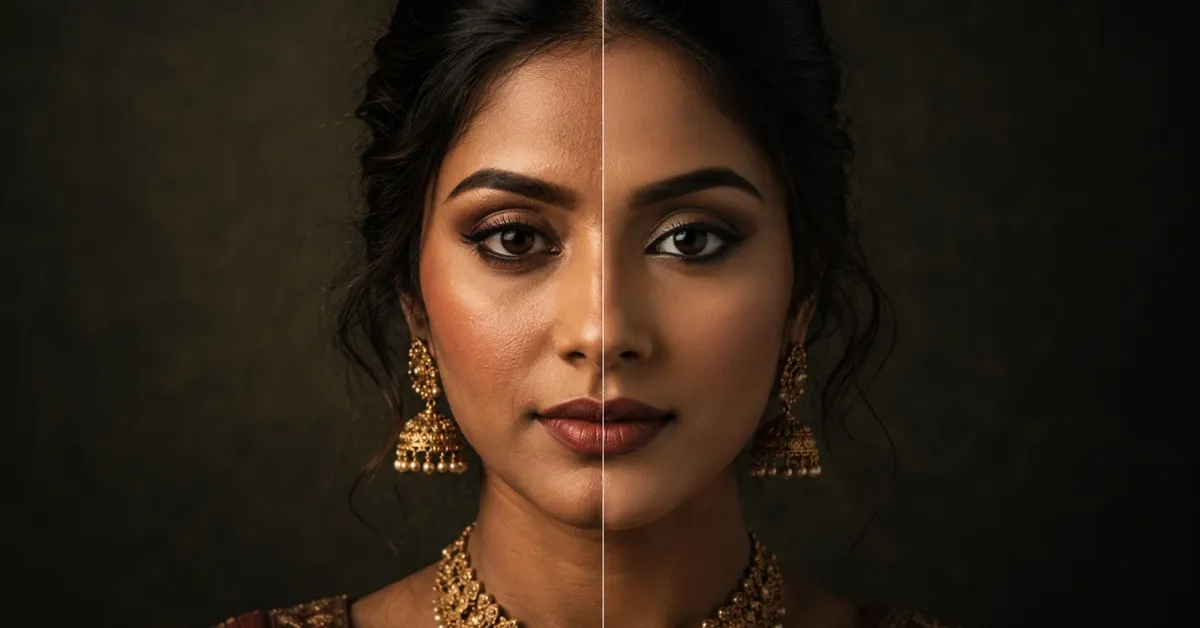
Look at the bride’s face against her neck and chest. In well-executed bridal makeup for dusky skin, the foundation stops being visible as a layer — the face reads as continuous skin, just perfected. If you can see where the foundation ends at the jawline, the artist did not shade-match properly.
Look at the afternoon and evening photographs, not just getting-ready shots. Foundation behavior over 6-8 hours tells you far more than a staged morning portrait. Ask specifically for photos from the afternoon or reception portion of real weddings. Good artists keep these. If they only show morning glow shots, push back.
Look at how the skin reads under direct flash. Pull photos onto your phone and zoom in. Ashy foundation reveals itself immediately — a grey, flat cast that lifts the skin color away from the body. A correct match on dusky skin glows warm and even under flash.
A bride who came to me from Indiranagar had just been through a trial with another artist who had no deep-skin brides in her portfolio. The foundation turned grey under flash and left a visible mask line at the jaw. When she checked my work and saw brides who looked like her – with even skin tone, no ashiness, no face-to-neck gap — she knew immediately she was in the right place.
How to choose the right bridal makeup artist in Bangalore covers the full evaluation process if you want to go deeper on what to look for.
What to Test During Your Bridal Makeup Trial
The trial is not a preview. It is a diagnostic, and for dusky and wheatish brides, a few specific checks are non-negotiable.
Test the foundation in natural daylight
Indoor salon lighting is flattering but unreliable. The moment the artist finishes your base, step outside or stand near a window in direct sunlight. Look at your face, neck, and chest together. Do they match? Is there any grey cast or orange pull? If the foundation looks off in daylight, it will look worse in photographs.
Test for oxidation over 2-3 hours
Oxidation occurs when the foundation reacts with your skin’s natural oils and shifts color over time. On deeper skin tones, the most common pattern is a grey or ashy pull — the foundation looks matched in the studio, then slowly turns flat by midday. Wear the trial makeup for at least 3 hours before assessing the base. The only way to catch oxidation is time; no other test replicates it.
Take flash photos from multiple angles
Flash photography is the real test. Take photos with your phone flash from the front, side, and three-quarter angle at the end of the trial — after blotting, after powder, and after setting spray. Check immediately. Does your face look the same color as your neck? Is there any white or grey cast? What looks beautifully warm in ambient light can turn flat or ghostly under direct flash if the artist has used too many light-reflecting powders or a foundation with a high white base.
Check the shade range your artist carries
Before the trial begins, ask your artist to show you the foundation shades they plan to work with. A well-stocked kit for Indian brides should offer a generous spread of shades across medium to deep tones, with both warm and neutral undertones. A bride from Whitefield came to me after two other artists – neither of whom stocked foundations deeper than NC35 in warm undertones. She had been told both times that “we can mix shades.” That is not good enough for a wedding day.
The bridal makeup trial checklist for Bangalore brides has the complete preparation guide if you want to go in fully prepared.
You won't forget your face.
Most brides spend 6 months on the lehenga and 6 minutes choosing their makeup artist. Your wedding photos don't forgive that math. Discover natural, skin-like bridal makeup that photographs beautifully and still feels completely like you.
and our wedding-day approach.
Questions to Ask Your Makeup Artist Before Booking
Most brides do not ask these. Start asking them.
Which foundation brands and shade ranges do you stock for dusky and wheatish skin tones? A skilled artist will name specific brands with deep shade ranges — MAC, Estee Lauder Double Wear, Huda Beauty FauxFilter, PAC, Makeup Forever. “I can mix shades” is not an answer.
Do you color-match foundation in natural daylight or under salon lights? The correct answer is daylight. Salon lights hide undertone mismatches that daylight will expose immediately.
How do you prevent oxidation during a long wedding day? They should mention primer choice, oil control, setting spray selection, and the trial as the proof point.
Can I see full wedding-day photos of brides with my skin tone — including both candid and flash shots? This separates artists who occasionally work with dusky brides from those who specialize in deeper skin tones.
Will you blend my foundation down my neck and chest to avoid a mask line? The answer must be yes without hesitation. If they say “we do face only,” that is your cue to leave.
Stop Asking Makeup Artists to Make You Fairer
I will say something most makeup artists will not say because they are afraid of losing a booking.
The pressure to lighten a bride’s skin does not only come from the artist. It comes from mothers-in-law. From aunties who comment on photos before they are even printed. From the bride herself, who has absorbed a lifetime of fairness cream advertising and grown up watching Bollywood calibrate beauty against a single, light-skin standard. So she sits at the trial and asks, quietly: “Can you make me look a little lighter?”
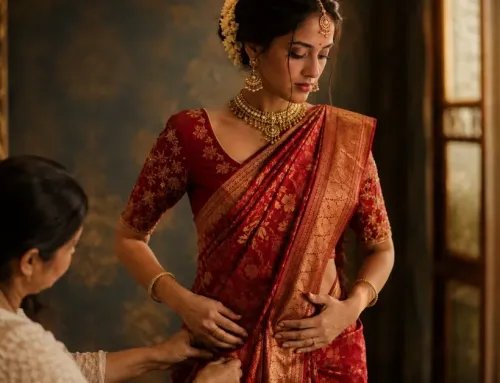
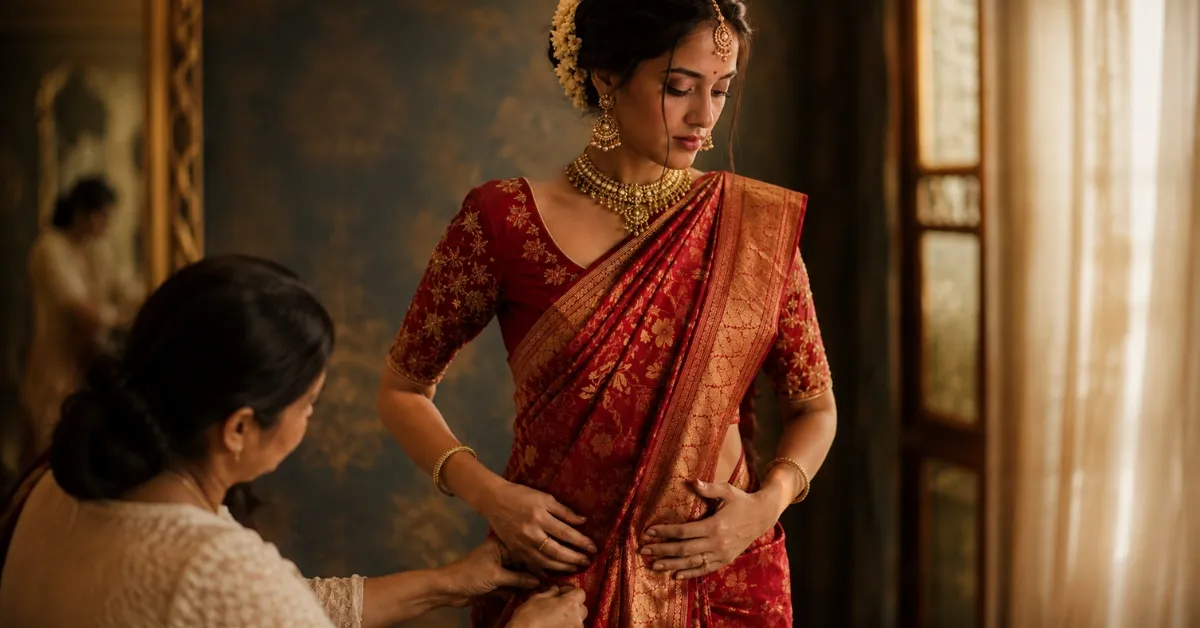
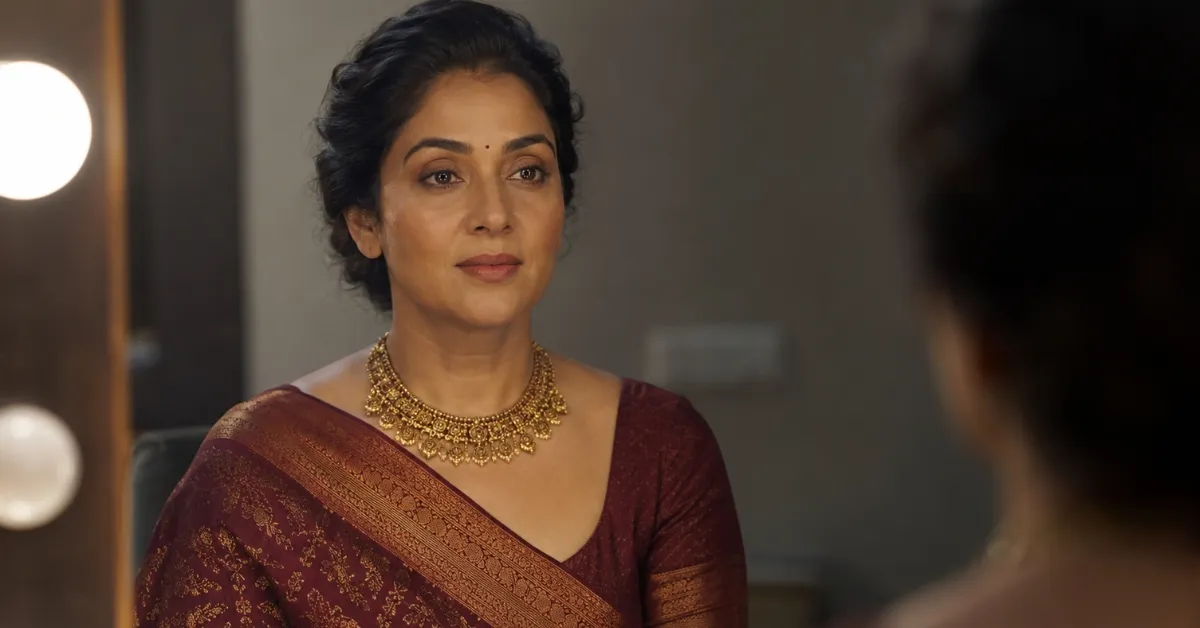
Last year, Ramya (name changed) came to MJ Gorgeous Makeup Studio for her Kannadiga wedding. Gorgeous dark red silk saree, heavy gold temple jewelry, and warm wheatish skin with yellow undertones. At the trial, she asked me to go lighter. Her mother, sitting behind her, agreed. I sat down and explained – not as a sales pitch, but as a professional with a 4.9-star rating on Google – that a lighter base on her undertone would oxidize grey by afternoon, would split visibly from her neck in every photograph, and would fight against the warmth that her entire outfit was designed to complement. I told her I would not do it.
She was uncomfortable. Her mother was more uncomfortable.
I matched her precisely: warm medium-deep foundation, peach corrector under the eyes, warm gold highlight, nothing that pulled cool or light. Three weeks after her wedding, she called the studio. She said, “MJ, I was scared. But I look like me. I look beautiful.”Her family agreed. The photographs were extraordinary — because she looked like herself, not a lightened version of someone else.
This is what the industry needs to say clearly: making a dusky bride look fairer is not good makeup. It is a bad technique dressed as a service. The right bridal glow comes from a perfect shade match, not from subtracting who you are. If your artist cannot tell you that confidently and stand by it under family pressure, find one who can.
What Bridal Glow Actually Looks Like on Dusky Skin
Glow on dusky skin looks different from glow on fair skin, and the technique must reflect that difference.
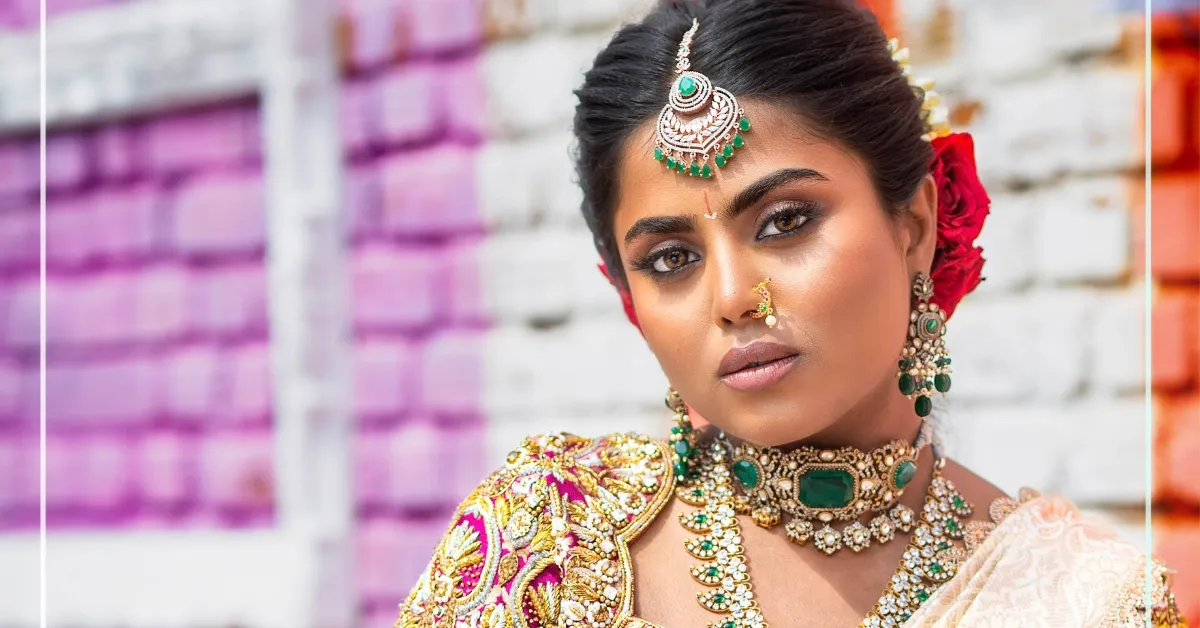
Warm-toned foundations with yellow or golden undertones will always outperform cool or pink-based formulas on Indian dusky skin. Setting powders must have a warm undertone — pure white powders create a flat, ashy finish that photographs poorly. Highlighter should be gold, bronze, or champagne — never silver or pearl, which sit on top of deeper skin rather than blending into it. Blush in peach, terracotta, warm rose, or apricot works beautifully; cool-toned pinks disappear entirely or pull muddy.
When these choices are made correctly, a dusky bride in photographs looks exactly like what she is: a woman with exceptional skin, beautifully enhanced. Not corrected. Not lightened. Enhanced.
If you are a dusky or wheatish bride in Bangalore and want to work with an artist who will match your skin precisely and not go lighter regardless of family pressure, the bridal makeup page at MJ Gorgeous Makeup Studio is the right place to start.
Frequently Asked Questions
MJ GORGEOUS · BRIDAL ANSWERS
Trust MJ Gorgeous for honest bridal guidance?
Add us as a Preferred Source on Google to find more of our advice in Search and AI results.