Makeup Steps for Indian Skin – Beginner Guide That Actually Works
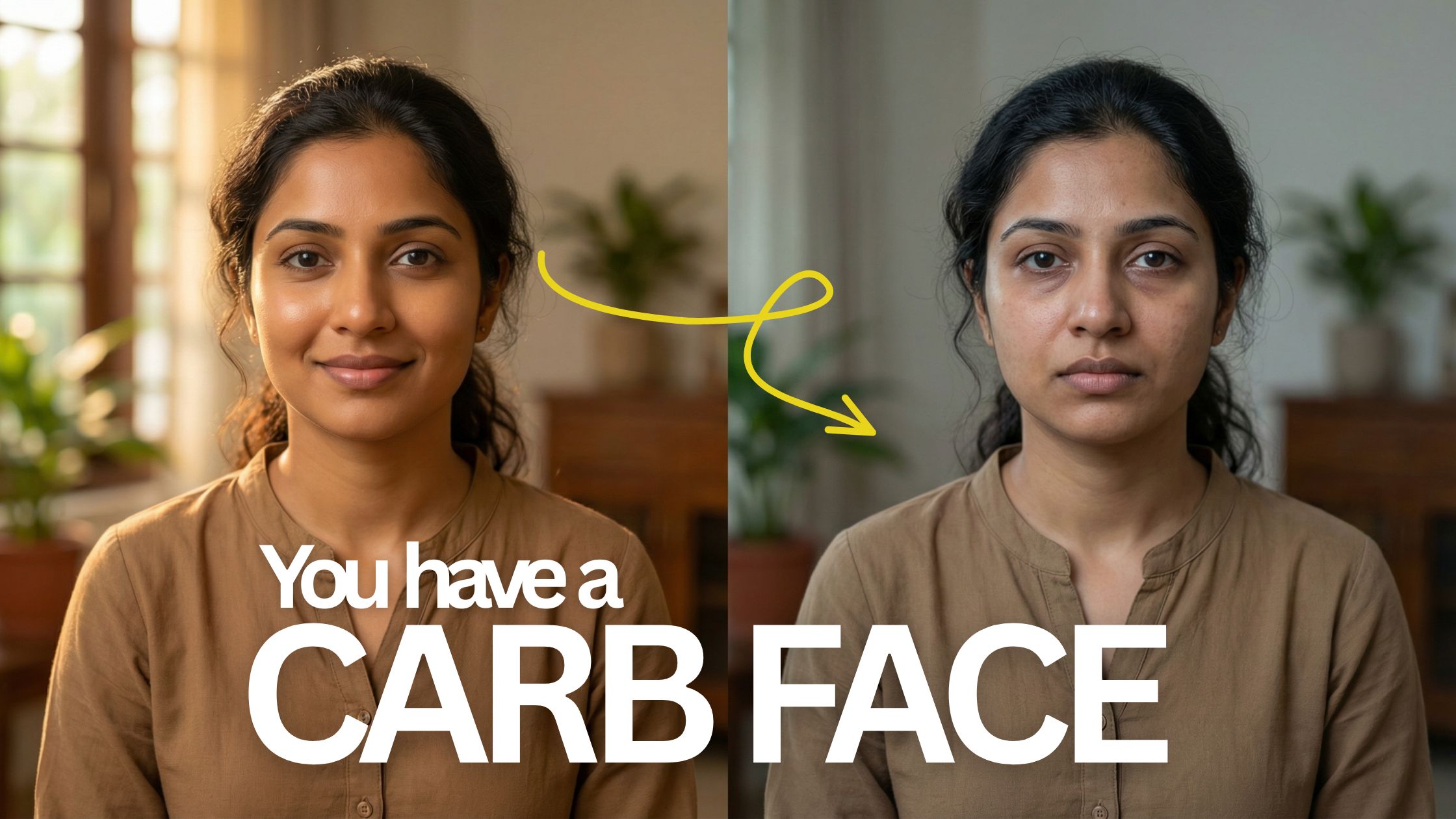
If makeup has ever confused you, that is normal. Most tutorials either assume you already know the basics, or they show a face with completely different skin concerns. Indian skin often has to deal with undertones that are harder to match, pigmentation around the mouth or under the eyes, tanning, sweat, and products that can suddenly look grey if the shade is wrong. That is why the correct makeup steps for Indian skin are not just about product order. They are about choosing the right finish, shade, and amount. Guidance aimed at Indian readers repeatedly stresses undertone matching, pigmentation correction, and shade realism as major issues.
This guide is written for a total beginner. You do not need to be a makeup artist. You do not need expensive products. You just need the right order and the right logic.
Quick answer – the correct makeup order for Indian skin
-
Cleanse
-
Moisturise
-
Sunscreen
-
Primer if needed
-
Colour corrector if needed
-
Foundation or skin tint
-
Concealer
-
Powder only where needed
-
Blush or bronzer
-
Brows
-
Eyes
-
Lips
-
Setting spray
That is the order. Now, let us make it work for real Indian skin, not fantasy tutorial skin.
Why Indian skin needs a slightly different makeup approach
The biggest beginner mistake is copying a random foreign tutorial exactly. The steps may look the same, but the concerns are often different.
Many Indian women deal with:
-
dark circles
-
pigmentation around the mouth
-
uneven tanning
-
olive, golden, or neutral undertones
-
oily T-zone with dry cheeks
-
makeup melting in heat and humidity
-
nude lipsticks that look dead or chalky
That means a routine that works on one face may fail on another. A base that looks soft on fair neutral skin can look ashy on medium warm skin. A pale concealer can make dark circles look worse instead of better. The wrong nude lipstick can drain the whole face.
That is why this page is not just “do primer, then foundation, then concealer.” Human beings do love oversimplifying their own problems, but skin usually refuses to cooperate.
Step 1 – Prep the skin first
Good makeup starts before makeup.
Wash your face with a gentle cleanser. Then apply moisturiser. If your skin is oily, use a lightweight gel moisturiser. If your skin is dry, use a richer cream. Let it settle for a minute.
After that, apply sunscreen.
This matters because sunscreen goes under makeup, not instead of makeup prep. The Indian Association of Dermatologists, Venereologists and Leprologists says sunscreen should be applied after skin care products and beneath makeup, and notes that SPF 30 or higher is a practical daily standard.
Step 2 – Use primer only where you need it
Primer is not compulsory for every face.
Use primer if:
-
Your nose area gets oily quickly
-
Foundation breaks around pores
-
Makeup disappears fast
-
Your skin feels uneven in texture
If your skin is normal or dry and your moisturiser already makes the skin smooth, you may not need much primer at all.
Best beginner approach:
Apply primer only on the T-zone, nose, and pore-heavy areas instead of the full face.
That keeps the skin looking fresh instead of over-layered.
Step 3 – Correct darkness before you conceal it
This is one of the most important makeup steps for Indian skin.
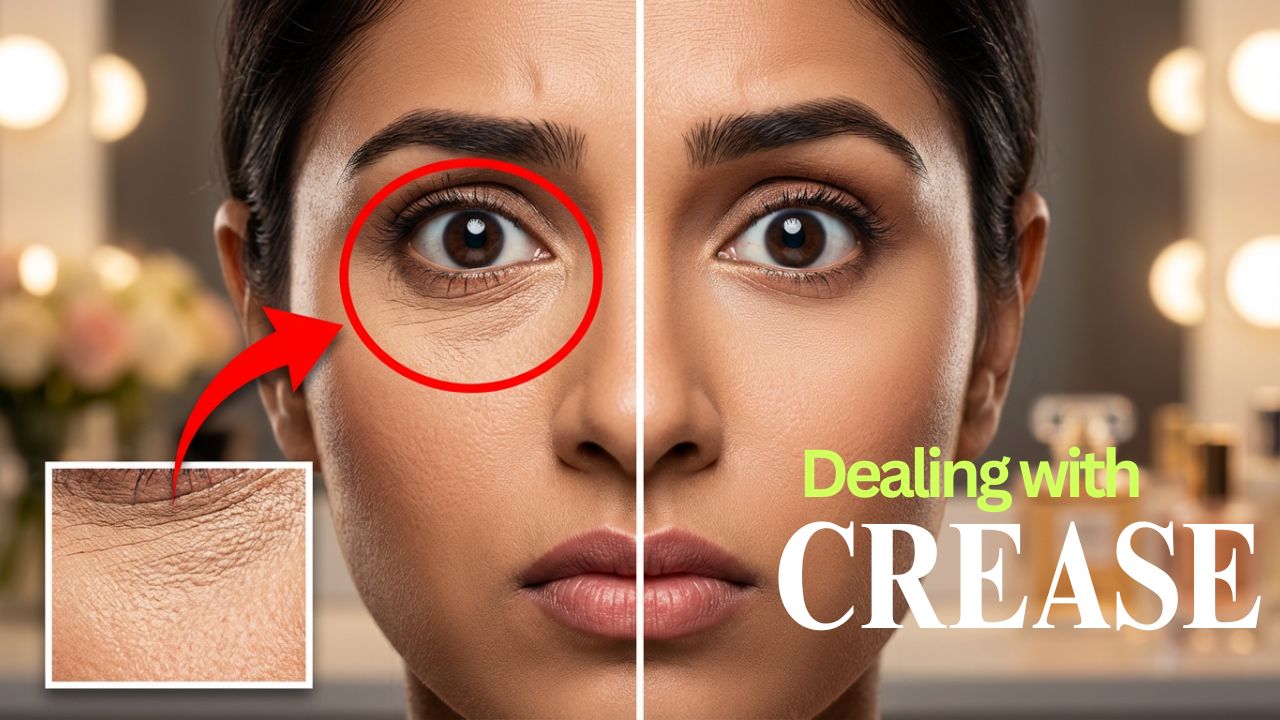
Many Indian skin tones have deeper under-eye darkness, eyelid darkness, acne marks, or pigmentation around the mouth. If you put a light concealer directly on top, the area may turn grey.
That is why colour correction matters.
-
Use peach corrector for mild dark circles or light pigmentation
-
Use an orange corrector for deeper darkness or stronger pigmentation
-
Use only a tiny amount on the dark area, not all over the face
Vogue India’s expert-backed guide specifically notes that orange and peach correctors are useful for cancelling pigmentation on deeper Indian skin tones.
After correcting, use concealer close to your own skin tone.
Not three shades lighter. Your face is not applying for an electricity connection.
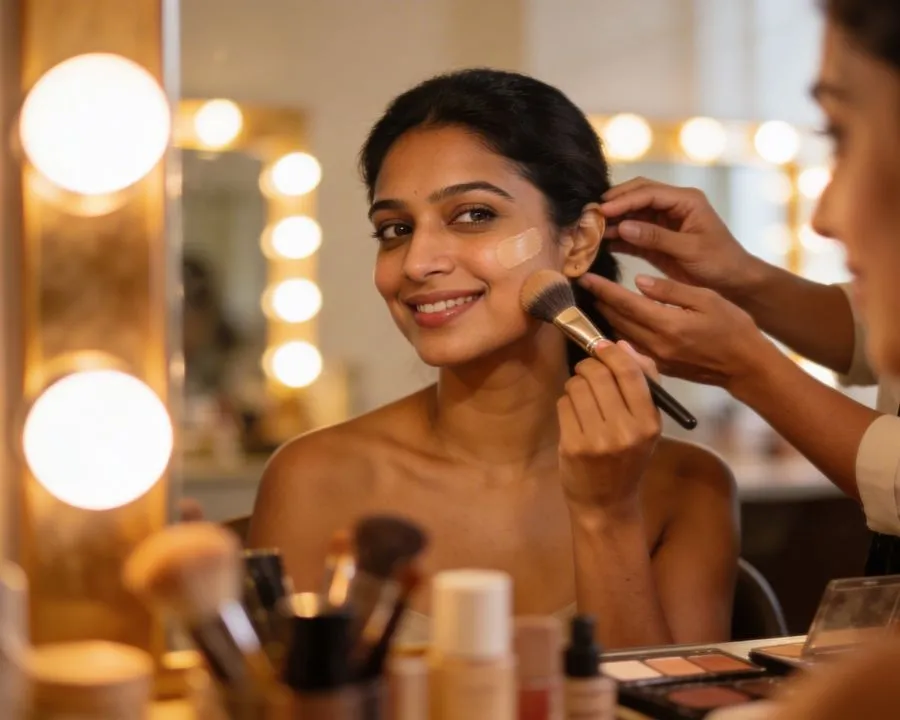
Step 4 – Choose a base that matches your undertone, not your fantasy shade
Foundation should make the skin look more even. It should not make the face look whiter.
For Indian skin, the right foundation usually depends on both:
-
depth of the skin tone
-
undertone such as warm, golden, neutral, or olive
Good Indian beauty guidance consistently recommends testing foundation on the side of the face or jawline, not the hand, and checking whether it disappears naturally after blending. If it looks ashy, it is too light. If it looks muddy, it is too dark.
How to choose the right base
-
Swatch 2 to 3 shades on the jawline
-
Check it in natural light
-
Wait a minute in case it oxidises
-
Match your neck and chest, not just your cheek
For beginners, a skin tint, BB cream, or light-to-medium coverage foundation is usually easier than a very heavy, full-coverage base.
Best texture rule:
-
oily skin: soft matte or natural matte
-
dry skin: natural or satin finish
-
combination skin: natural finish
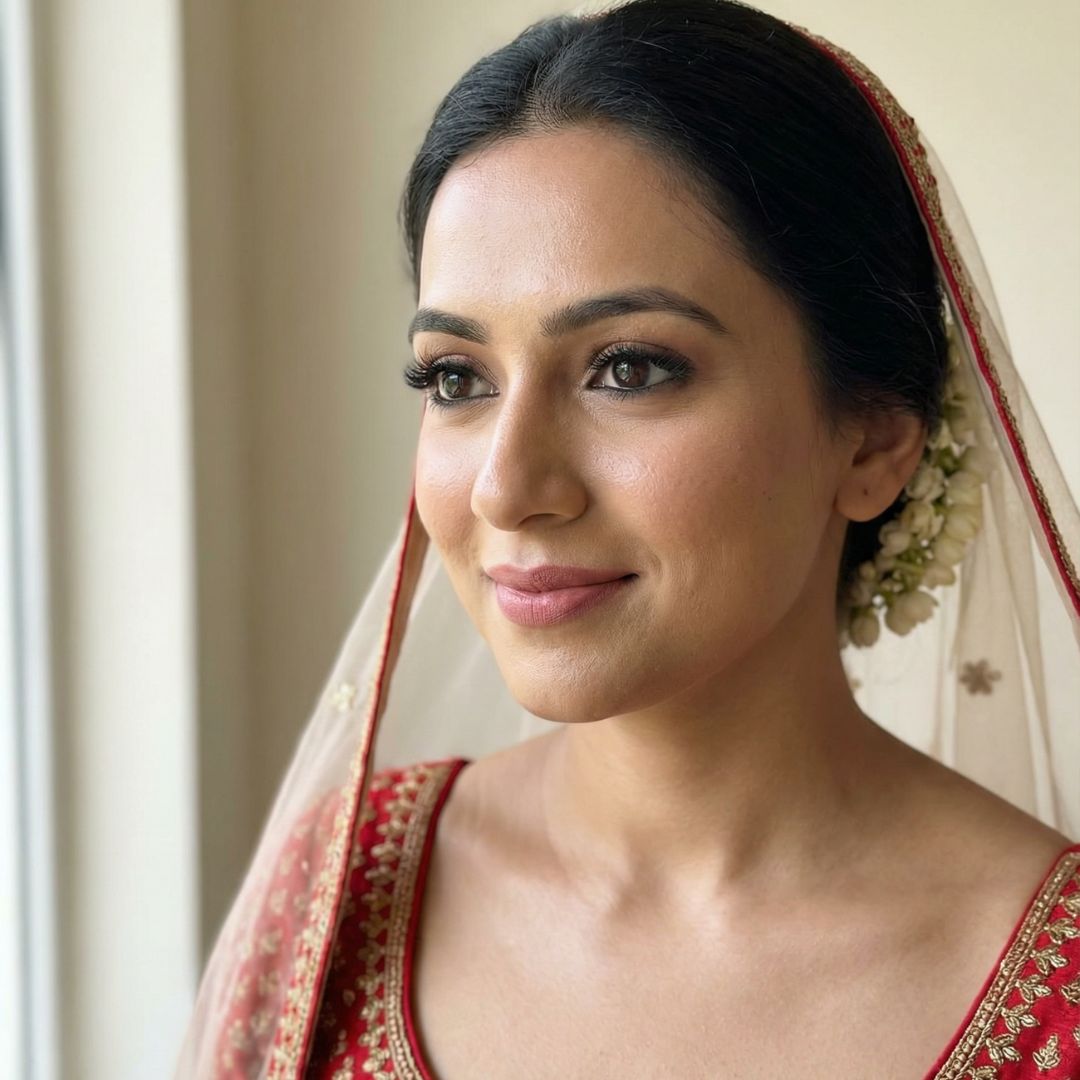
Step 5 – Apply concealer only where you need extra help
The foundation is for overall evening out. Concealer is for targeted correction.
Use concealer on:
-
Under-eyes
-
Acne marks
-
Redness around the nose
-
around the mouth if needed
Do not paint triangles the size of a small country under your eyes just because a reel told you to.
For beginners, a small amount blended well looks much better than a lot of product sitting on the skin.
Step 6 – Set only the areas that move or get oily
Powder is helpful. Too much powder is punishment.
If you have oily skin, set:
-
under-eyes
-
sides of nose
-
forehead
-
chin
If you have dry skin, set:
-
under-eyes
-
around the mouth
-
only where needed
This is one of the easiest ways to stop makeup from looking cakey on Indian skin, especially in daylight.
Step 7 – Bring the face back to life with blush
Once foundation and concealer go on, the face can look flat. Blush fixes that.
For Indian skin, shades like peach, coral, warm rose, terracotta, and muted berry usually work better than very pale pink. Vogue India’s artist-led advice also recommends warmer coral or deeper tones for warmer complexions and notes that cream and powder textures behave differently.
Simple rule:
-
cream blush for dry or normal skin
-
powder blush for oily skin
Put it slightly above the apples of the cheeks and blend upward.
Step 8 – Keep brows and eyes simple if you are a beginner
You do not need 14 eye products to look polished.
A beginner eye routine can be:
-
brush brows upward
-
fill gaps lightly
-
use one soft brown or bronze eyeshadow
-
add kajal or liner if you like
-
finish with mascara
That is enough for an everyday look.
If your eyelids are darker than your face, do not panic. That is common. A little concealer or a neutral base on the lids before eyeshadow can help the colour show better.
Step 9 – Choose lip colours that respect your natural lip tone
This matters more than people think.
A lipstick that looks beautiful on one person can look dull on another because the actual lip colour underneath is different. Vogue India specifically notes that nude lip choice should depend not just on skin tone, but also on the natural colour of the lips.
Safer beginner shades for Indian skin
-
rosy brown
-
peach brown
-
warm nude
-
terracotta
-
brick
-
mauve brown
-
soft berry
If a nude lipstick makes your face look sleepy, washed out, or strange, it is not “you.” It is the wrong nude.
Makeup steps by skin type
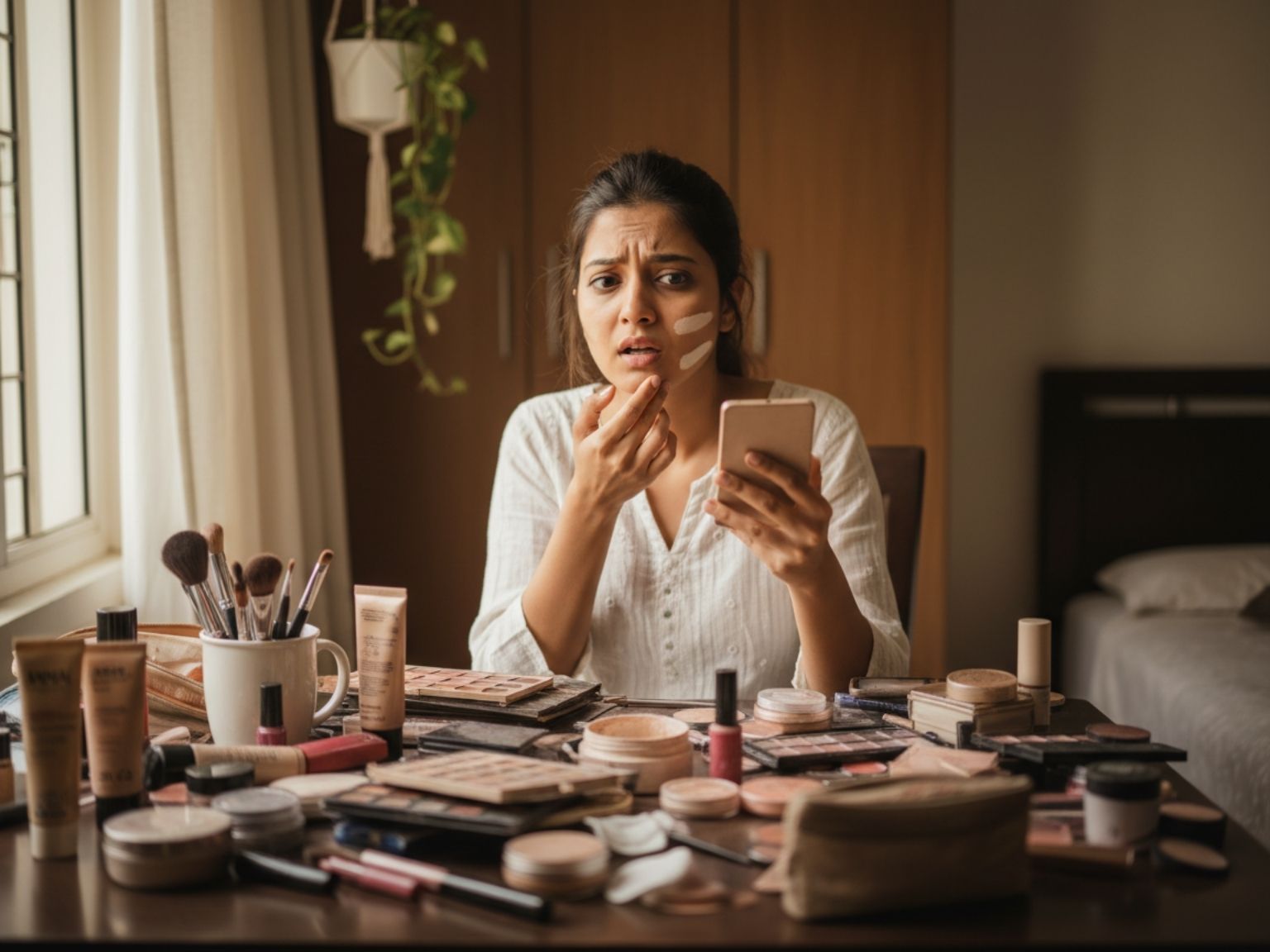
Makeup steps by concern
That last one is such a common Indian-skin problem that it deserves its own page later, because the internet keeps pretending everyone has the same undertone. How efficient.
A 5-minute everyday makeup routine for Indian skin
When you are in a hurry, do this:
-
Moisturiser
-
Sunscreen
-
Concealer only where needed
-
Compact or light powder on the T-zone
-
Blush
-
Brows
-
Kajal or mascara
-
Lipstick
That is enough for office, college, errands, or a casual outing.
Not every day needs a full face.
What to buy first if you are starting from zero
A complete beginner does not need a giant makeup bag.
Start with:
-
moisturiser
-
sunscreen
-
concealer
-
light base or skin tint
-
compact powder
-
blush
-
kajal or mascara
-
one flattering lipstick
-
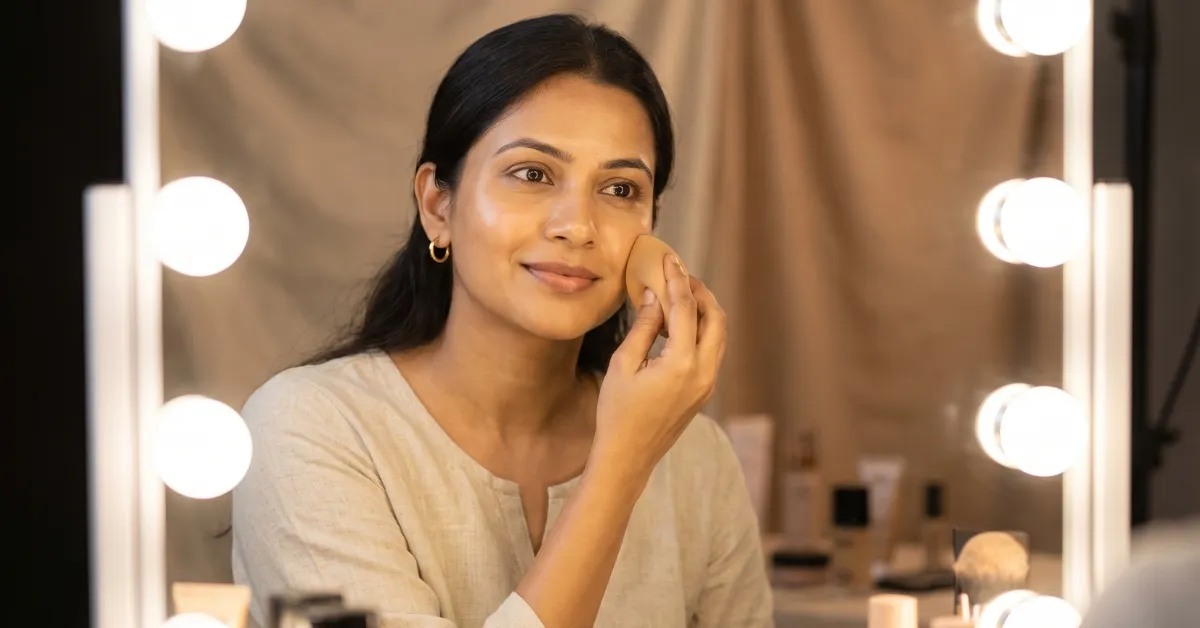
Beauty sponge or basic brush
That is enough to learn the technique without wasting money.
Maybelline’s beginner-kit guidance also reflects this reality: a starter kit usually revolves around core basics like primer, foundation, concealer, powder, blush, eye basics, and lips, not a hundred random products.
Common mistakes beginners make on Indian skin
1. Choosing a foundation that is too light
This creates ashiness.
2. Skipping colour correction
Then, overusing concealer.
3. Using too much powder
This makes the face look dry and heavy.
4. Copying Western tutorials exactly
The skin concerns and undertones may differ significantly.
5. Wearing the wrong nude lipstick
This can wash out the face instantly.
6. Ignoring sunscreen under makeup
Especially if tanning or pigmentation is already an issue.
Two simple real-life examples
Priya has medium warm skin, oily cheeks near the nose, and darkness around the mouth. If she applies a light foundation straight over everything, the mouth area still looks dull, and the rest of the face looks pale. When she uses a tiny bit of corrector first and picks a better undertone match, the whole face suddenly looks cleaner and more natural.
Nandini has dry skin and under-eye lines. When she copies a matte full-glam tutorial, her makeup starts cracking by afternoon. When she switches to richer prep, less powder, and a cream blush, the same face looks softer and younger.
That is why learning makeup steps for Indian skin is not about rules for everybody. It is about understanding what your own face needs.


Our verdict
The best makeup routine for Indian skin is not the longest one. It is the smartest one.
Prep properly. Use sunscreen. Correct darkness before concealer. Match the undertone carefully. Use thin layers. Powder only where needed. Choose lip and blush colours that actually suit your colouring.
That is what makes makeup look smooth, natural, and flattering.
And if you are tired of guessing what suits you, this is exactly what our Personal Grooming Workshop in Bangalore is designed to help with. Instead of copying random tutorials, you learn what works for your face, your skin, and your daily routine. You can also apply here if you want structured guidance, or read more about MJ Shekhar, the artist behind MJ Gorgeous. If someone wants a smarter shortcut than wasting money on the wrong products for six months, this would be it. Happy Makeup y’all.
External Reference
For the sunscreen line in the article, use this clean external link once:
Indian Association of Dermatologists, Venereologists and Leprologists sunscreen guidance
Frequently Asked Questions
MJ GORGEOUS · BRIDAL ANSWERS
Trust MJ Gorgeous for honest bridal guidance?
Add us as a Preferred Source on Google to find more of our advice in Search and AI results.