
Tamil Madisar Sari History, Significance, Occasions, and Why It Still Matters
Madisar is not just a saree drape. It is a cultural signal. In Tamil Brahmin traditions, especially among Iyer and Iyengar families, the Madisar is associated with marriage, ritual identity, and ceremonial belonging. It is usually worn with a 9 yard saree and is most strongly seen today during weddings, pujas, Seemantham, Sumangali Prarthanai, and other important religious or family occasions. While it was once part of everyday dress for many women, it is now largely reserved for events that carry cultural or spiritual weight.
Quick answer
The Tamil Madisar sari is a traditional 9-yard drape worn mainly by Tamil Brahmin women for important religious and family occasions. What makes it different is its dhoti-like lower structure, its ritual significance after marriage, and the fact that Iyer and Iyengar families drape it differently. Brides still wear it because it carries far more than style. It carries continuity, family memory, and ceremonial meaning.
What is a Madisar sari?
Madisar, also called Madisaar or Koshavam in broader explanations of the drape, is a way of wearing a saree in which part of the fabric passes between the legs, visually combining elements of both the saree and the dhoti. The drape is typically associated with Tamil Brahmin women and is most commonly linked with two sub-styles: Iyer kattu and Iyengar kattu. Unlike the common 6-yard saree drape seen today, Madisar traditionally uses 9 yards.
That extra length is not cosmetic. It changes how the garment sits, moves, and reads visually. A regular saree can look elegant. A Madisar looks ceremonial. The shape instantly signals that the wearer is stepping into a tradition, not just dressing up for a photograph.
The history behind the Tamil Madisar sari
Most public references trace the Madisar drape back to earlier Indian draped garment traditions, with explanations linking it to the merging of earlier garment forms, such as antariya and uttariya, in ancient India. The commonly cited dating places its roots as far back as the period between the 2nd century BCE and the 1st century CE. That does not mean every detail of present-day Madisar remained frozen from that era, because humans never preserve anything without also adding family-level variations and opinions. Still, it shows that the drape belongs to a long history of Indian garments rather than to a recent custom.
Within Tamil Brahmin communities, Madisar became strongly associated with married women and ceremonial life. Older accounts describe it as an expected form of dress for major occasions, and in earlier generations, it was more common as daily wear than it is today. Modern life has pushed it out of everyday use, but that has also made it more emotionally charged. When a garment moves from ordinary life into ritual use, it becomes more symbolic, not less.
Why Madisar is significant in Tamil weddings and rituals
The significance of Madisar is not just that it is old. Plenty of things are old. So are bad wiring systems and family grudges. What matters is why this drape has survived.
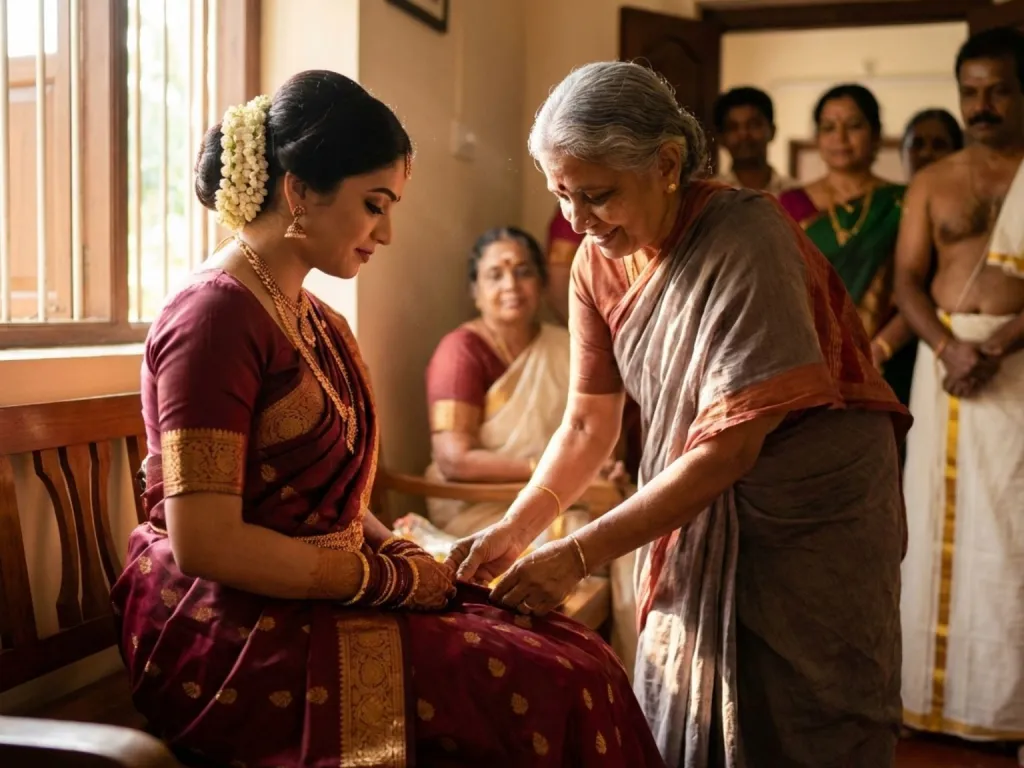
Madisar carries ritual seriousness. It is worn for ceremonies where family, faith, and social identity are all visible at once. Public sources consistently associate it with weddings, pujas, Seemantham, and other religious observances, and several cultural accounts frame it as a marker of marriage, discipline, and tradition.
It also carries symbolic weight. Many explanations describe it as marking a woman’s transition into married life and domestic responsibility. Others emphasize how the drape connects brides to mothers, grandmothers, and older customs. Even where different writers get poetic in slightly different ways, they agree on the central point: Madisar is not worn because it is trendy. It is worn because it means something.
A realistic example helps here. Imagine a bride like Janani in Bangalore. She may wear contemporary outfits every other day of her life, but for her muhurtham, she chooses Madisar because that is the one look in the album that will feel fully anchored in family tradition. Another bride, Revathi, may be more comfortable in modern drapes yet still insists on Madisar for the wedding ritual because she knows the visual language of that ceremony matters to her family. That is not fashion confusion. That is cultural precision.
Iyer and Iyengar Madisar difference
This is one of the most practical search queries around the topic, and your old article barely touches it. That was a miss.
The most commonly cited difference is the direction of the pallu. Iyers drape the pallu over the right shoulder, while Iyengars drape it over the left. The core logic of the drape remains connected, but the final presentation differs enough that families usually care a lot about getting it right. In some explanations of the styling, there are also small visual distinctions in how the drape is structured and finished.
This matters for bridal styling. A Madisar look is not something a team should “adjust on the spot” unless they want an elder in the room silently judging them with the force of a Supreme Court bench. The family style should be confirmed in advance.
When is the Madisar worn today?
Madisar is no longer everyday wear for most women. The more common reality today is occasion-based use. It is usually worn at weddings, religious ceremonies, first-pregnancy rituals such as Seemantham, poojas, and, in some families, even death ceremonies or memorial observances. That selective use is exactly why the drape has become even more culturally concentrated. It appears when the moment matters.
Modern variations also exist. Public sources note that while traditional Madisar uses a 9-yard saree, adapted versions are sometimes draped using 6 yards or pre-stitched formats for convenience. Those versions may be easier for contemporary brides and families, especially outside Tamil Nadu, but they are generally seen as practical adaptations rather than the original form.
Why modern brides still choose Madisar
Modern brides choose Madisar because some wedding looks are meant to be beautiful, while others are meant to belong. Madisar does both.
It creates structure in photographs. It pairs naturally with temple jewellery, jasmine, traditional blouses, and Kanjeevaram silks. Most importantly, it gives the bride an unmistakably South Indian ceremonial identity that cannot be swapped out with a generic luxury look. Several recent fashion and bridal articles also point out that Madisar remains popular because it links a bride to ancestry, ritual, and visual grandeur. Strip away the marketing language, and the point still stands. The drape survives because it still works emotionally.
From a bridal beauty perspective, the drape also changes how the whole look should be built. Makeup for a Madisar bride should usually support dignity, definition, and skin-like finish rather than fight the saree with overdone trends. The drape itself already carries authority. The face should not look confused about that.
For brides planning a traditional ceremony, choosing the right South Indian bridal makeup in Bangalore matters because the makeup has to support the drape, jewellery, and the overall ritual look.
When the drape changes, the whole bridal plan
Madisar affects more than clothing. It affects timing, draping support, jewellery balance, portrait planning, and how polished the bride feels during rituals. This is where working with an experienced bridal makeup artist helps, especially when the saree drape, jewellery balance, timing, and photography all need to come together without confusion.
That is why the right team should think about:
-
whether the family follows Iyer or Iyengar draping
-
whether a 9-yard or an adapted version is being used
-
How much time is needed for proper draping
-
How the hairstyle and flowers will sit with the pallu and jewellery,
-
whether the makeup should be softer, more defined, or more traditional for the specific ceremony
This is where a bridal artist with South Indian wedding experience actually helps. Not because makeup artists enjoy making things complicated. Human weddings handle that perfectly well on their own. It helps because ceremonial looks require coordination, not just cosmetics.
Our verdict
Madisar is one of the strongest examples of how clothing can carry ritual, identity, and family memory simultaneously. It is not just a traditional drape. It is a ceremonial language. For Tamil weddings especially, it still matters because it communicates belonging in a way a standard saree drape often does not.
Frequently Asked Questions
MJ GORGEOUS · BRIDAL ANSWERS
Trust MJ Gorgeous for honest bridal guidance?
Add us as a Preferred Source on Google to find more of our advice in Search and AI results.