
Kannada Wedding Rituals Explained – Real Ceremony Order and the Right Bridal Makeup Look
If you are searching for Kannada wedding rituals and also wondering what the right bride makeup look should be, the real answer is this: a Kannada wedding is not just about pretty tradition. It is a sequence of meaningful, family-led rituals, and the bridal look has to respect that rhythm. The makeup cannot feel disconnected from the saree, jewellery, flowers, muhurtham timing, or community style. Also, not every Kannada wedding follows the exact same version. Many rituals are widely shared, but some details change by family, sect, and region across Karnataka.
Quick answer
A typical Kannada wedding flow often begins with Nischay Tamulam, Naandi, and in some families rituals such as Bale Shastra or Chhapra Puja, followed by Kaashi Yaatre and Dev Karya. On the wedding day, the sequence commonly includes Mandap Puja, the groom’s welcome, Var Puja, Jaimala, Dhare Herdu, Mangalya Dharana, and Saptapadi. For the bride, the makeup should usually be elegant, ritual-friendly, long-wear, and balanced with silk, gold jewellery, flowers, and early-morning photography rather than heavy, trend-chasing glam.
Why Kannada weddings feel different
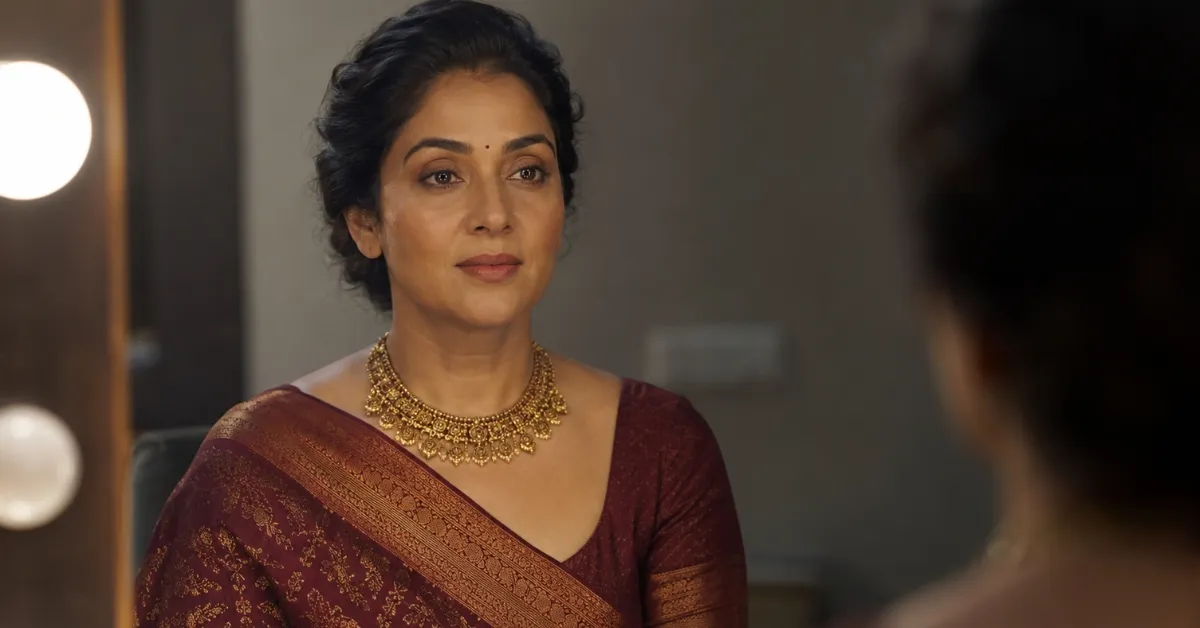
Kannada weddings are often remembered for being traditional without being loud. The ceremony structure is detailed, but the overall mood is usually more prayer-led and family-led than performance-led. That is one reason brides often regret copying a random Pinterest look without understanding the ceremony setting. A Kannada bride can look premium, but the look still has to fit within the rituals. Competitor ritual guides repeatedly show the same pattern: Kannada weddings are rich in symbolism, but the styling is strongest when it feels rooted rather than overdone.
Kannada wedding rituals help the bride to actually understand
Nischay Tamulam
This is the formal engagement phase that marks the alliance and usually brings both families together with gifts, blessings, and the fixing of the wedding date. Multiple sources describe it as the official beginning of the wedding journey, with betel leaves, coconuts, sweets, a saree, and a dhoti gifting as recurring elements.
Naandi and early family blessings
Naandi is one of the key prayers that marks the start of the wedding rituals in earnest. WeddingWire and WeddingBazaar both describe it as a family priest-led ritual involving a copper pot filled with holy water and a coconut, along with prayers for a smooth, blessed wedding and often the offering of the first invitation card to the divine.
Bale Shastra, Chhapra Puja, and other family-specific rituals
This is where many articles oversimplify Kannada weddings. Not every family does everything the same way. Some guides include the Bale Shastra, in which the bride performs a puja and shares bangles with married women in the family. Others also include Chhapra Puja and similar preparatory rituals depending on custom. So if you are a bride or a bridal makeup artist in Bangalore, do not assume one “Kannada bridal template” fits every house.
Kaashi Yaatre and Dev Karya
Kaashi Yaatre is one of the most memorable rituals. The groom symbolically threatens to leave for Kashi, as if choosing a spiritual life over marriage, carrying a walking stick, an umbrella, and travel items, before being persuaded to return. Dev Karya is another important ritual in which the groom seeks blessings before the wedding, often involving temple worship and the sanctification of items to be used in the ceremony.
Mandap Puja, groom welcome, and Var Puja
Once the wedding day begins, the mandap is purified and prepared for the rituals. The groom is then welcomed by the bride’s family, and Var Puja honours him in a sacred way. 1Plus1 Studio and Manyavar both depict the groom as an embodiment of Vishnu at this stage, with the bride’s father washing his feet and presenting ceremonial clothing.
Jaimala, Dhare Herdu, Mangalya Dharana, and Saptapadi
These are the emotional anchors of the main ceremony. In several guides, the bride enters with her face partially covered, often behind peacock feathers or a screen, and the couple exchange garlands in Jaimala. Dhare Herdu is the giving away of the bride’s hand. Mangalya Dharana is the tying of the mangalsutra, and Saptapadi marks the vows through the sacred seven steps. These rituals matter for makeup planning because they involve close-range viewing, photographs, tears, flowers, gold, and constant movement.
What a Kannada bride’s makeup should look like
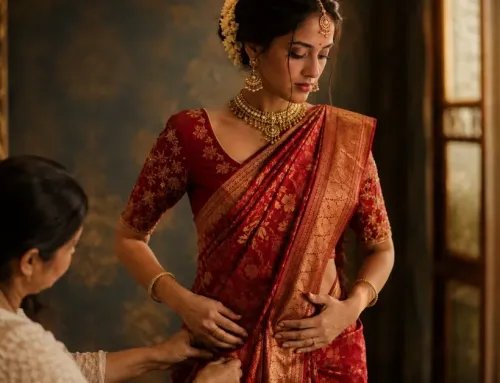
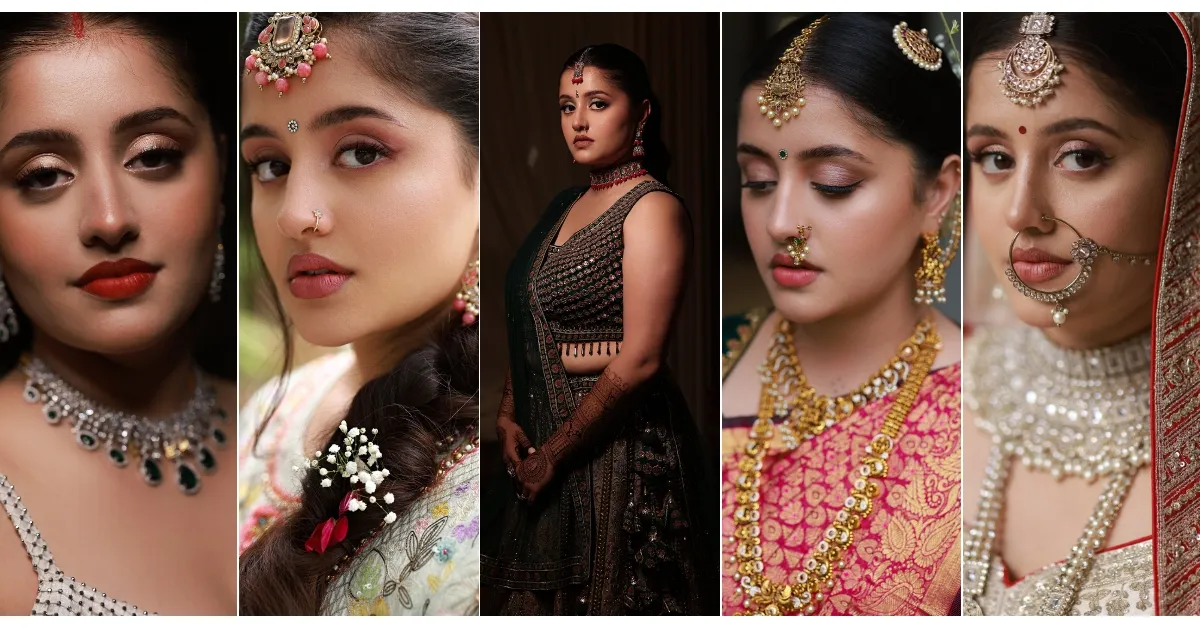
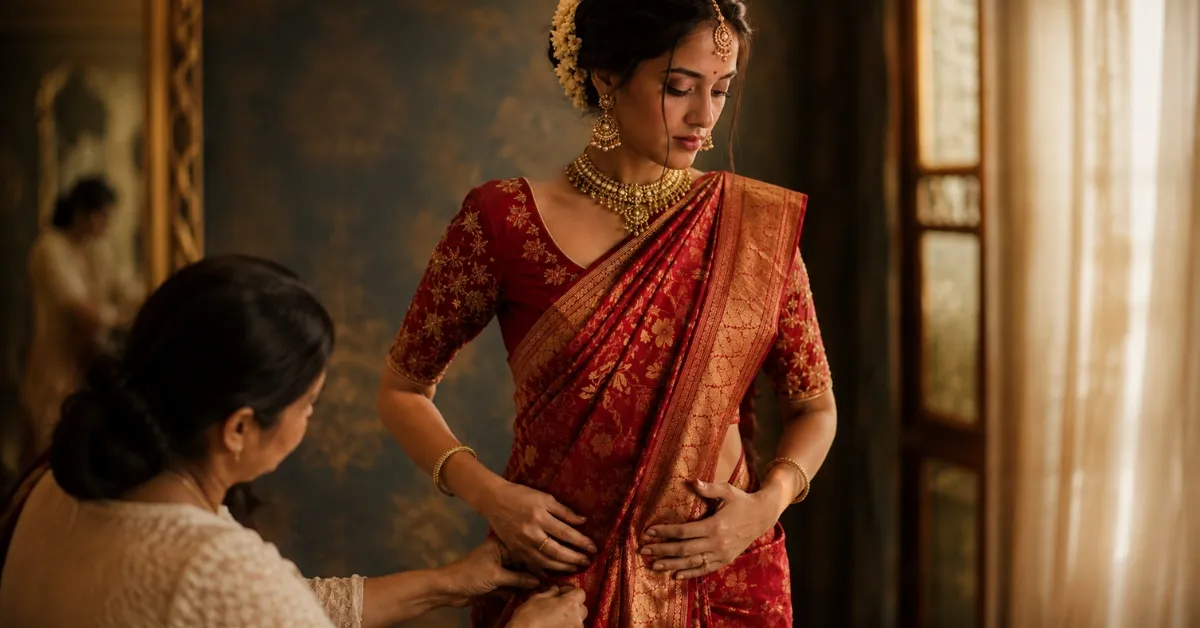
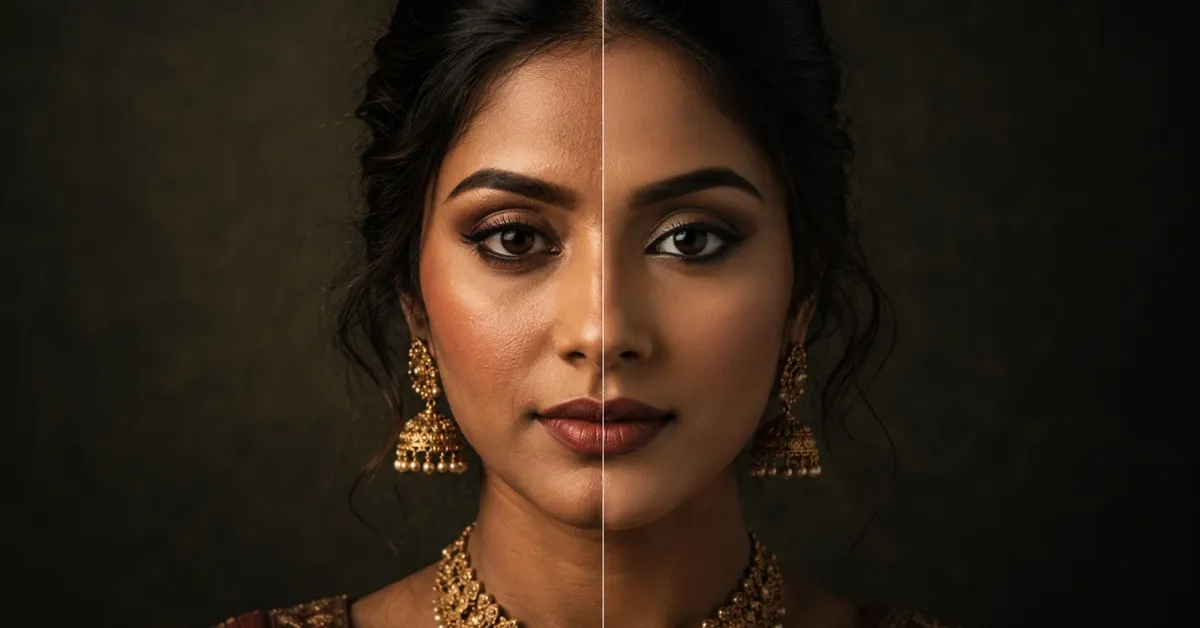
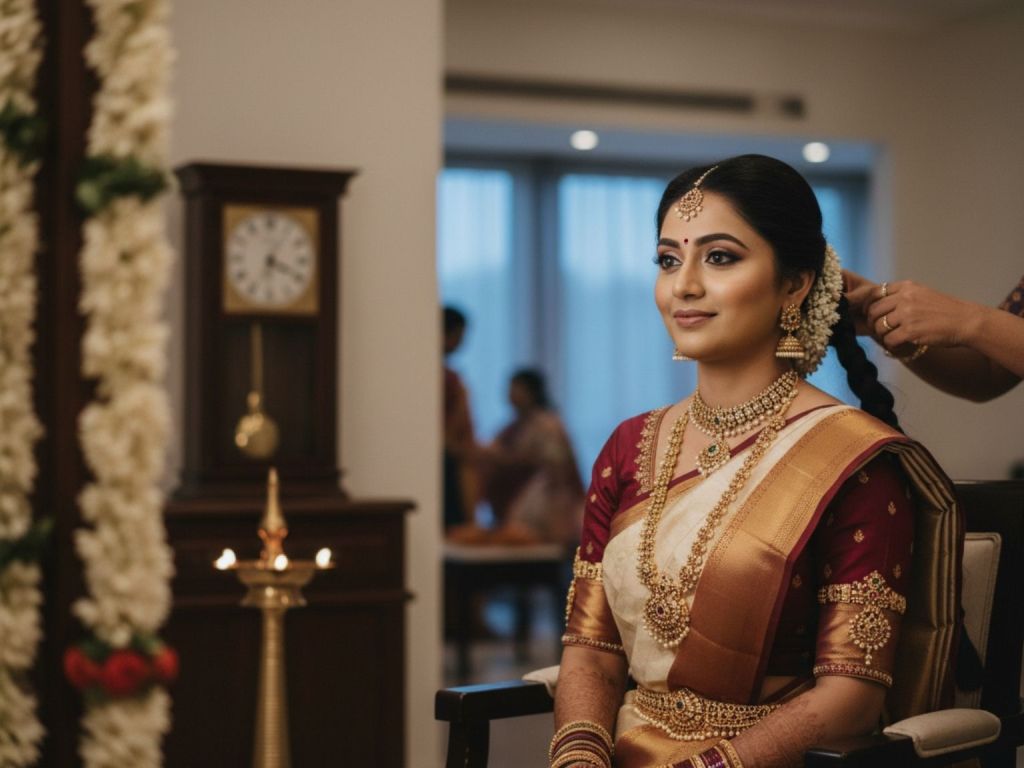
A strong Kannada bridal look is not just “traditional makeup.” It has a job. It must sit well with the saree, survive long rituals, flatter temple jewellery and flowers, and still look beautiful in daylight, warm indoor light, and flash photography. Your own South Indian bridal makeup in Bangalore page already makes this point clearly: South Indian ceremonies are close-range and ritual-heavy, so the finish must be culturally aligned and still look clean in close-ups.
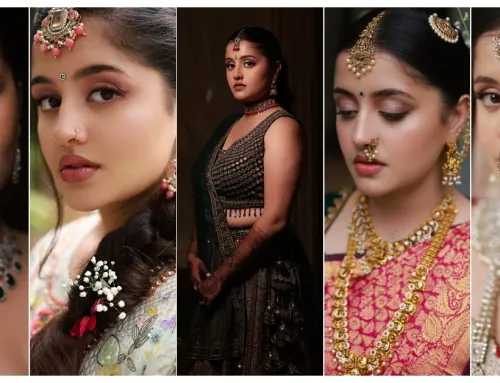
That usually means a skin-like yet controlled base, eyes that stay defined without becoming too smoky for the ceremony, lip colour that complements silk and gold rather than fighting them, and hair that works with jasmine, bun structure, braid support, or family styling preferences. If the bride has pigmentation, acne marks, or texture issues, HD bridal makeup in Bangalore can be the smarter route, as it is designed for refined correction in high-resolution photography.
How to plan the makeup without last-minute regret
A Kannada wedding look should be planned around the ceremony, not added on at the end. If there is a muhurtham in the morning and a more glamorous evening event, those two looks should not be treated as identical. Your bridal reception makeup in Bangalore page rightly separates ceremony logic from stage-light logic, and your same-day muhurtham and reception bridal makeup guide explains why timelines need to be structured properly.
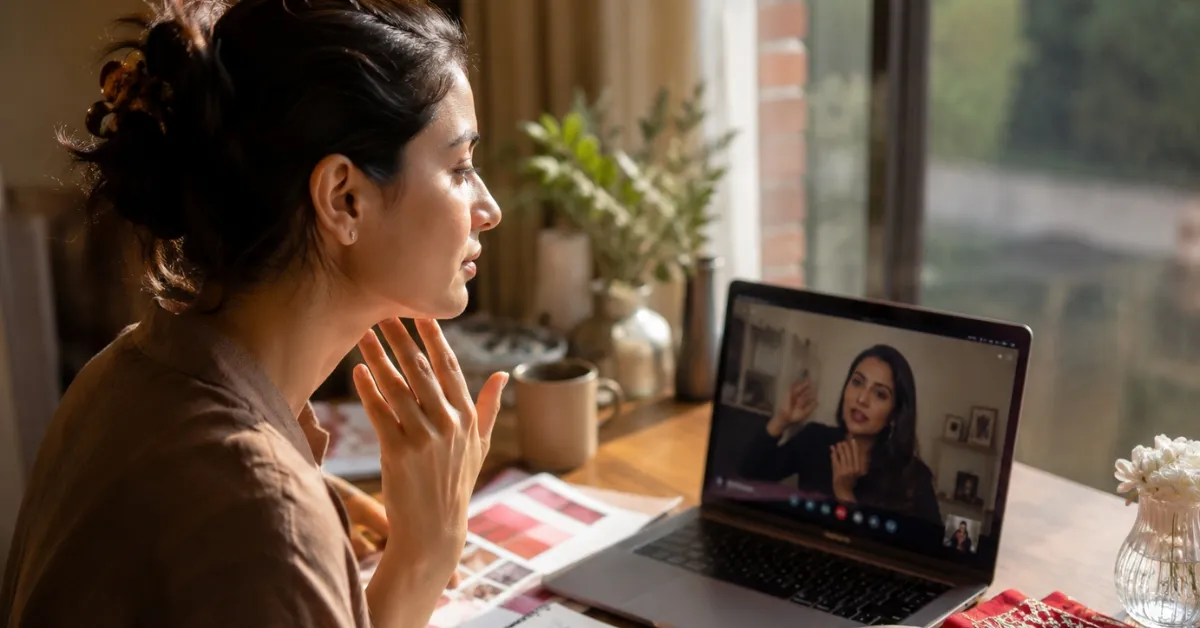
This is exactly why a bridal makeup trial in Bangalore matters. Trials are not vanity sessions. They are decision sessions. Your trial page explains that brides usually come in with screenshots, doubts, family opinions, and stress, and the trial turns that confusion into a practical direction. For a Kannada bride, that direction should also include drape style, jewellery weight, flower volume, veil or no veil, and whether the family wants soft grace or slightly stronger definition.
Real-life style examples brides actually relate to
Take Vidya, a homemaker from Basavanagudi. She wanted the kind of bridal makeup she kept seeing online: glossy skin, heavy contour, and a dramatic eye. But her wedding was an early-morning Kannada ceremony with temple jewellery, a rich silk saree, and elders who preferred a more rooted bridal look. At her trial, the look was softened, the base was made more controlled, the blush was toned down, and the hairstyle was adjusted to sit properly with jasmine and the pallu. In photos, she still looked premium, but she also looked like she belonged in her own wedding.
Then there is Ananya, a software engineer from Whitefield, who had a same-day muhurtham and reception. Her first mistake was assuming that one bridal look could do both jobs. It could not. Her muhurtham look needed softness, structure, and alignment with the ceremony. Her evening look needed more definition for stage lights and flash. Once the two looks were planned separately, the entire day felt calmer and more intentional.
MJ Gorgeous Makeup Studio · Bengaluru
Your date is either
available or it isn't.
Excellence is rarely available last minute. Bridal dates fill 6 to 9 months ahead, and peak season closes first. A two minute enquiry tells you where you stand.
Check your dateMJ Shekhar reviews every enquiry personally.
When your wedding plan needs a different approach
If your family follows a very specific community style, or if your Karnataka wedding is blending customs, you need someone who asks questions before touching the makeup brush. That is where MJ Shekhar and the broader bridal makeup artist in Bangalore planning process become more useful than generic bridal inspiration. The right artist should ask what ritual comes first, what saree you are wearing, how much time exists between draping and photography, whether your jewellery is antique gold or lighter, and whether your family wants the face to feel subtle, grand, or somewhere carefully in between.
Frequently Asked Questions
MJ GORGEOUS · BRIDAL ANSWERS
Trust MJ Gorgeous for honest bridal guidance?
Add us as a Preferred Source on Google to find more of our advice in Search and AI results.