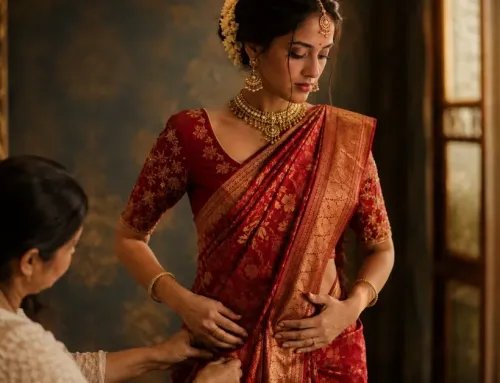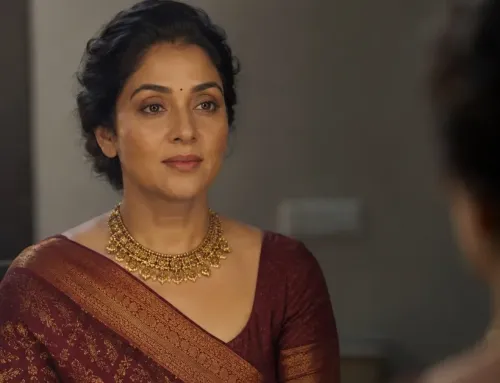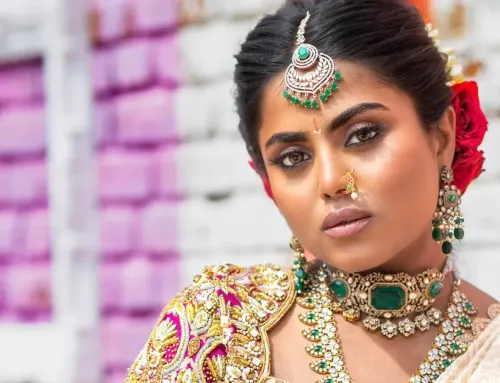
Scared of Looking ‘Painted’ in Your Wedding Photos? Here’s the Truth No One Tells You
Bridal makeup photos are the most honest test of any makeup artist’s skill — and if you’ve ever scrolled through wedding albums wondering why some brides look fresh and alive while others look like they’re wearing a costume, you already understand the fear. The dread of looking “painted” on your wedding day is one of the most common things brides tell me when they first sit down in my chair, and I want to address it directly and completely in this post.
Why do bridal makeup photos make some brides look so unnatural?
The short answer is this: most “painted” looks come from a mismatch between the makeup technique, the products used, and the actual wedding’s lighting conditions. A bride who looks passable to the naked eye in a studio can look like a completely different person once a camera flash or harsh outdoor light hits her face. This is not a bride problem. This is a planning problem — and it is entirely preventable.
When I first started doing bridal work in Bangalore, I noticed that many brides came to me after bad experiences elsewhere, carrying photographs as evidence. The photos told the same story every time: caked foundation, flashback from silica-heavy setting powders, drawn-on brows that looked artificial, and contour lines that the camera made look like shadows from a stage play. The makeup may have been applied with good intentions, but no one had thought about how it would translate under a camera lens or in direct sunlight at a mandap.
The science behind this is straightforward. Human eyes are forgiving. Cameras are not. A camera, especially with flash photography, picks up texture, shimmer, and product buildup in ways our eyes simply smooth over. This is why HD bridal makeup was developed — it uses finely milled pigments and formulas that scatter light evenly rather than reflecting it in concentrated spots. When a product is too heavy, too matte in the wrong areas, or not blended to a seamless finish, the camera announces it loudly and permanently.
What types of bridal makeup photos show the most natural results?
If you browse enough wedding photography from Bangalore weddings, a pattern emerges. The brides who photograph most naturally tend to share a few common traits in their makeup. First, their skin looks like skin — you can see a subtle texture, the suggestion of a pore, the natural variation in tone that makes a face look human rather than plastic. Second, their eye makeup complements their features rather than overpowering them. Third, their lip colour, however bold, looks like something their mouth could actually produce rather than something painted on top of it.
I worked with Priya from Koramangala last November, a software architect who was getting married at a heritage property in Mysore. She came to me specifically because she had seen a friend’s wedding photos where the makeup looked beautiful in person but almost theatrical in photographs. Priya wanted to look like herself — just a more polished, more glowing version. We did a full bridal makeup trial three weeks before the wedding, shot test photographs under similar lighting conditions to the venue, and adjusted her foundation shade, blush placement, and eye technique based on what the camera was actually capturing. Her wedding photos came back looking exactly the way she wanted — recognisably her, just breathtaking.
Another bride I think about often is Sneha from Whitefield, who had a South Indian ceremony followed by a reception the same evening. She had olive-toned skin and was nervous about foundations that either turned ashy on camera or looked too warm and flat. We used a layered approach — lighter coverage on the center of the face, building slightly around areas that naturally catch shadow — and the final photographs looked dimensional and alive rather than flat and overdone. You can see similar thinking in how I approach South Indian bridal makeup for different skin tones and ceremony lighting.
How does your makeup technique actually change what bridal makeup photos look like?
Technique is everything, and this is where the real conversation about “painted” looks has to happen. Product choice matters, but application is what separates makeup that photographs beautifully from makeup that photographs badly. Let me walk you through the specific decisions that affect your photographs.
The foundation application is the first major variable. When foundation is applied too thickly in one pass, it sits on the surface of the skin and creates a mask-like finish. Applying in thin, buildable layers allows the skin’s natural texture to breathe through, which reads as natural in photos. The same principle applies to setting powder — a light, targeted dusting on the T-zone is very different from a heavy all-over powder that flattens the face and causes that notorious white cast in flash photography.
Contour and highlight placement is the second big factor. These techniques are used to replicate, with makeup, what light naturally does to a three-dimensional face. But when overdone, they fight with the light actually present at your wedding, creating a look that seems muddy or confused to the camera. I always factor in the specific lighting conditions of a bride’s venue — whether it’s outdoor golden-hour photography, indoor temple lighting, or banquet hall flash — before deciding how to add dimension to the face.
Eye makeup technique has a profound effect on how a bride looks in bridal makeup photos. Heavy liner drawn far beyond the natural lash line, or eyeshadow that is not blended into the crease, creates a theatrical look that cameras exaggerate. Blending takes time — real time, not a few extra seconds — and it is one of the most visible markers of an experienced artist.
If you want to go deeper on which products and technologies translate best into photographs, I’ve written about the comparison between airbrush bridal makeup and traditional HD techniques, and the difference it makes is significant for photographic results.
Is a makeup trial really necessary if you want good bridal makeup photos?
Yes — and I want to be direct about why. A trial is not a luxury or a nice-to-have. It is a photographic test run, and for brides who are worried about looking painted, it is non-negotiable. When you sit in my chair for a trial, we do not just discuss your case theoretically. We apply it, we photograph it, and we look at those photographs together. We identify exactly what is working, what needs adjusting, and which products are behaving the way we need them to.
According to Vogue India’s bridal beauty guides, the trial is consistently cited by top makeup artists as the single most important step in preventing regrets on the wedding day itself. I would go further: the trial with test photographs is the only reliable way to know what your bridal makeup photos will actually look like. Not mirrors, not Instagram filters, not how it looks under the studio lights at a salon. Photographs.
The trial also gives us time to discuss the specific photography conditions for your wedding. Is your photographer using flash or natural light predominantly? Will there be outdoor ceremonies in Bangalore’s afternoon sun? Will the reception be indoors under warm amber lighting? Each scenario calls for different adjustments, and knowing them in advance lets us plan rather than react.
What should you actually ask your makeup artist before the wedding day?
This is a conversation that most brides feel too nervous to have directly, and it shouldn’t be that way. The questions that matter most for photographic results are practical ones. Ask your artist whether they have experience adjusting makeup specifically for photography. Ask to see photographs — not just portfolio photos chosen by the artist for their best angles, but candid, unposed shots from real weddings they have done. Ask whether they factor in your photographer’s equipment and style when planning the makeup.
I’ve written a detailed post on what questions to ask before hiring a bridal makeup artist for your wedding, which provides a framework for both sides of that conversation. A skilled artist welcomes these questions. Hesitation or vagueness in response to them is itself informative.
Beyond the trial and the conversation, pay attention to how your skin is performing in the weeks leading up to the wedding. Skin that is well-hydrated, consistently moisturized, and free from active breakouts is a foundation — in every sense — that makes a makeup artist’s job significantly easier and your photographs significantly better. The secrets to long-lasting bridal makeup begin well before the wedding morning itself.
MJ Gorgeous Makeup Studio · Bengaluru
Your date is either
available or it isn't.
Excellence is rarely available last minute. Bridal dates fill 6 to 9 months ahead, and peak season closes first. A two minute enquiry tells you where you stand.
Check your dateMJ Shekhar reviews every enquiry personally.
How does the shift toward natural bridal makeup affect how you photograph?
There has been a genuine and meaningful shift in what brides are asking for over the last few years, and it directly addresses the fear of looking painted. The trend toward natural bridal makeup — skin that looks enhanced rather than covered, eyes that look expressive rather than constructed, lips that look polished rather than theatrical — is not just aesthetic. It is also practical. Natural-finish techniques photograph more forgivingly across a wider range of lighting conditions, which means brides who choose this direction tend to have fewer surprise moments when the wedding album arrives.
This does not mean minimal or invisible makeup. It means makeup that works intelligently — that understands which features to emphasize, how to build coverage without weight, and how to use color so it photographs as warmth rather than pigment. I have written more about what natural bridal makeup actually means and how brides can describe that preference clearly.
For brides doing multiple functions — a mehendi, a sangeet, the wedding ceremony itself, and a reception — the approach to natural makeup can be calibrated differently for each event. The sangeet makeup might carry more drama and color because the lighting is designed for performance. The muhurtham look might be softer and more precise because the photography will be more intimate and varied. Understanding these differences is part of what separates thoughtful bridal planning from a one-size-fits-all approach.
Frequently Asked Questions
MJ GORGEOUS · BRIDAL ANSWERS
Trust MJ Gorgeous for honest bridal guidance?
Add us as a Preferred Source on Google to find more of our advice in Search and AI results.